The 2024 PGL CS2 Major Copenhagen was meant to showcase the best of Counter-Strike 2. Instead, a quarter-final match between G2 Esports and MOUZ became the backdrop for a protest that dragged skin-gambling rivalries onto the main stage. In March 2024, individuals linked to CSGOEmpire entered the arena during the match, prompting security to intervene. The incident immediately triggered a wave of condemnation from analysts, casters, players, and fans, and it set off a chain reaction that would soon empty the roster of CSGOEmpire's own tournament. By 2026, the episode remains a defining case study in how gambling interests can collide with competitive integrity, event safety, and team reputation.
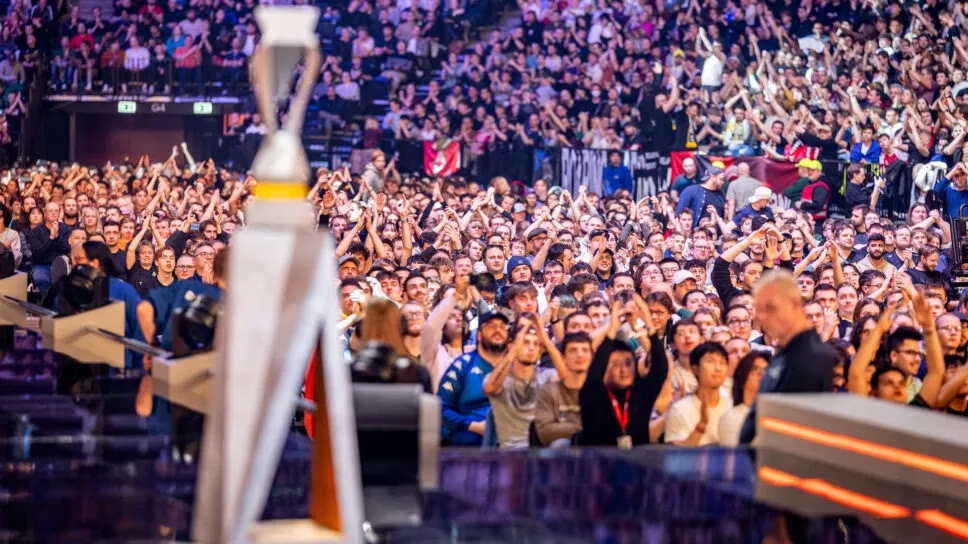
A Stage Invasion That Changed the Conversation
The chaos at the Copenhagen Major was not an isolated prank. It was the visible peak of a long-running feud between CSGOEmpire and CSGORoll, another skin-gambling site. CSGOEmpire founder Monarch had spent months publicly attacking CSGORoll, accusing it of predatory business practices and calling it an illegal operation. In May 2023, Monarch published an open letter to the CS2 skin community, using it as a platform to criticize the rival site. Social media posts, streams, and jabs followed, turning a business rivalry into a public spectacle.
At the Major, that spectacle became physical. Protesters stormed the stage and disrupted the G2 vs. MOUZ match. One individual handcuffed himself to a movable barrier and later shouted 'I can't breathe' while being escorted away, a phrase that appeared to mock George Floyd's final words before his death at the hands of Derek Michael Chauvin. The gesture drew widespread disgust, especially because the protester's own recording showed that security was not restricting his breathing. Monarch, meanwhile, seemed to encourage the disruption. In a Kick stream, he stated, 'No matter how many security guards (PGL) have, I will always get more people.' Reports also indicated that he pushed for a raid of the Major, telling workers that they would be fired if they did not go out in handcuffs.
The Rivalry Behind the Chaos
The roots of the incident stretch back to the broader skin-gambling ecosystem that has long surrounded Counter-Strike. CSGOEmpire and CSGORoll had been competing for attention and users, and Monarch's public campaign against CSGORoll made the conflict personal. The founder's open letter and subsequent social media activity framed the rivalry as a moral crusade, but critics saw it as a marketing war that exploited the community. When the protest erupted at the Major, many in the CS2 scene argued that the gambling operators had finally crossed a line that had nothing to do with competition.
The fallout was immediate. Prominent voices in esports called the scene a disgrace. Analyst Taffy wrote that the repercussions would be wide-reaching, from enhanced security at LAN events to fewer media opportunities outside of those mandated by tournament organizers. Commentator Mnmzzz described the protesters as 'mentally ill morons' and said their actions were illegal and pathetic, noting that players and PGL staff could have been harmed if security had not acted quickly. The community's anger was not limited to the protesters themselves; it extended to the betting companies whose feud had inspired them.
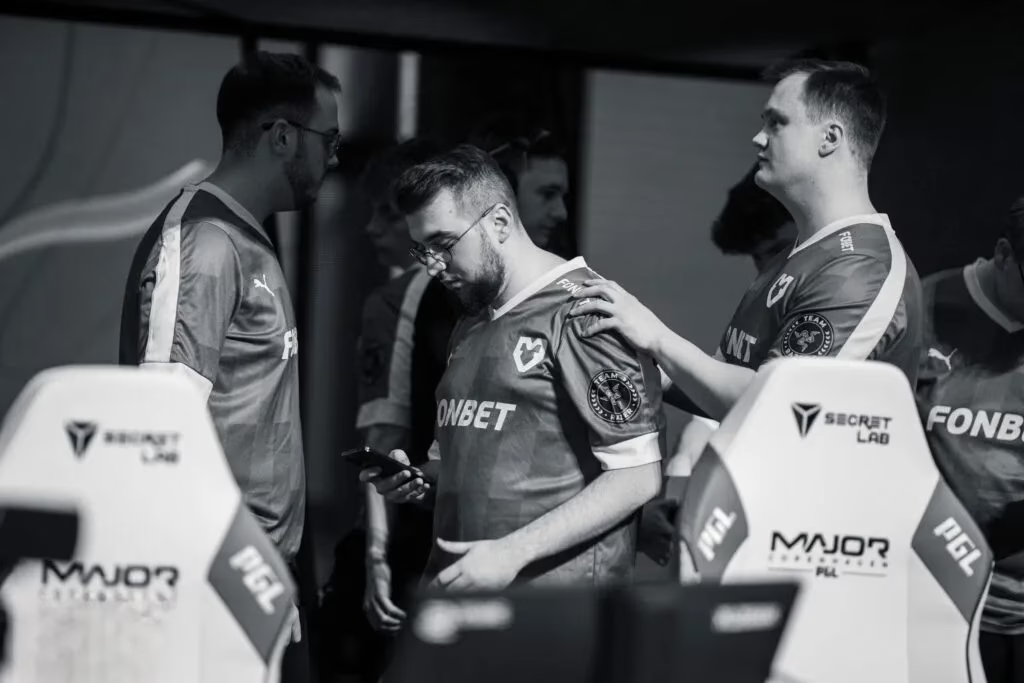
Teams Walk Away from the CSGOEmpire Cup
The most concrete consequence arrived in the days that followed. The CSGOEmpire Cup, a tournament with a $50,000 prize pool scheduled to begin on April 3, 2024, began losing participants one by one. Organizations publicly withdrew, citing the unsettling circumstances at the Major and expressing discomfort with the event's association. GamerLegion announced its decision on social media, saying it wanted to enjoy the rest of the playoffs and focus on what really matters: Counter-Strike. BLEED Esports pointed to the disturbing events in Copenhagen. Team 3DMAX stated that it strongly condemned the actions that took place on March 29.
The list of withdrawals grew into a significant exodus. Among the teams that stepped away were:
| Team | Reason or Public Statement |
|---|---|
| BLEED Esports | Blamed the unsettling circumstances at the Major |
| Team 3DMAX | Strongly condemned the March 29 actions |
| GamerLegion | Withdrew and emphasized Counter-Strike itself |
| Nexus | Joined the growing list of withdrawals |
| MOUZ NXT | Removed from the CSGOEmpire Cup roster |
| Sampi | Withdrew from the event |
| Permitta | Withdrew from the event |
| SINNERS | Withdrew from the event |
| ENCE Academy | Withdrew from the event |
| ALTERNATE aTTaX | Withdrew from the event |
| HAVU | Withdrew from the event |
For CSGOEmpire, the withdrawals undercut the tournament's credibility. For the teams, the decision was a matter of reputation management. In a scene where sponsorships and fan trust are fragile, being linked to a protest that mocked a murdered man and endangered event staff was a risk few organizations wanted to take. The exodus also signaled that teams were willing to sacrifice competitive opportunities to protect their brands.
Community Backlash and Industry Consequences
The backlash went beyond individual teams. Casters, analysts, and players demanded that tournament organizers and game publisher Valve take a firmer stance on gambling-related disruptions. Some called for all skin-gambling sites to be shut down, arguing that their turf wars had no place in professional Counter-Strike. Others warned that the incident would lead to stricter security at LAN events, reduced access for media and fans, and more cautious sponsor vetting.
By 2026, many of those predictions have become standard practice. Major LAN events now feature layered security protocols, tighter stage access, and clearer codes of conduct for attendees. Tournament organizers are more reluctant to approve outside media opportunities that could become flashpoints. Teams, meanwhile, scrutinize sponsors and event partners more carefully, especially those connected to gambling. The CSGOEmpire incident did not end skin gambling in Counter-Strike, but it made the industry's risks impossible to ignore.
Valve's potential involvement remains a lingering question. The company has acted against gambling operations before, and the Copenhagen protest gave critics fresh evidence that such sites can destabilize the competitive ecosystem. Whether through policy changes, tournament rules, or direct enforcement, Valve's response could still shape how gambling operators interact with CS2 in the years ahead.
The 2026 Perspective
Two years later, the CSGOEmpire Cup exodus is remembered less as a tournament story and more as a warning. It showed how quickly a business rivalry between gambling sites can spiral into real-world disruption. It demonstrated that teams are not powerless; they can withdraw, speak out, and force event organizers to reckon with reputational risk. It also exposed the uncomfortable proximity between esports and skin gambling, a relationship that many fans and professionals have long criticized.
The episode did not produce a clean resolution. CSGOEmpire continued to operate, and the broader gambling ecosystem persisted. But the protest at the Copenhagen Major changed the conversation. It pushed security, sponsorship, and player welfare to the forefront of event planning. It made teams think twice about lending their names to gambling-backed tournaments. And it reminded the CS2 community that competitive integrity depends not only on anti-cheat systems and fair rules, but also on the people and businesses allowed into the arena.
For historians of esports, the G2 vs. MOUZ quarter-final will always be tied to the stage invasion. For the teams that withdrew from the CSGOEmpire Cup, it was a moment to choose reputation over prize money. For the community, it was a test of whether Counter-Strike would defend its own values. In 2026, that test is still ongoing, but the lessons from Copenhagen remain clear: when gambling rivalries enter the server, everyone risks losing.