It was a crisp evening in May when the servers flickered to life, and millions of players around the world descended once more into the chaos of PUBG Mobile. But this time, the familiar battlegrounds hummed with a strange, metallic resonance. The new Mechafusion mode had arrived, and it promised to rewrite the rules of battle royale. As the countdown on the spawn island began, squads stared up at the sky. Giant alien spaceships cruised lazily overhead, their massive shadows swallowing the terrain below. This was not just another update—it was an invitation into a futuristic warzone where technology and survival collided.
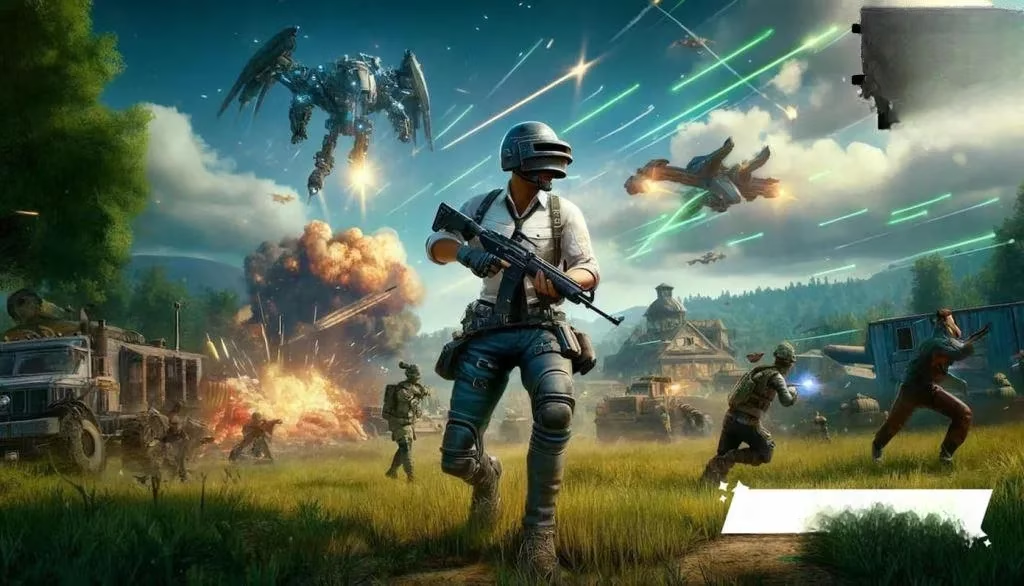
For seasoned commander Ryan and his squad, the drop plane became a leap of faith into the unknown. They marked a red-flagged zone on the map—one of the alien spaceship crash sites. Rumors had spread through the community of legendary Mecha robots hidden aboard these vessels, humanoid war machines that could turn the tide of any engagement. As the parachute canopy cracked open above him, Ryan spotted a squad already converging on the same objective. The race for the Mechafusion arsenal had begun.
Mechas, the core marvel of this season, spawn exclusively within these titanic spaceships. Each robotic exoskeleton rests inert until a player claims its control core, after which the hunt for modular attachments begins. Scattered across Erangel, Livik, and Sanhok are limbs, armor plates, rocket launchers, and jet thrusters—all gleaming with alien alloy. Ryan's teammate Elena secured a pair of armored legs from a container near the military base, while another squadmate found a magnetic amplifier inside a derelict building. The pressure was high because only a limited number of full suits could be assembled per match. Clashes erupted around ship wreckage, transforming quiet areas into frantic hot drops reminiscent of the early days of Payload mode.
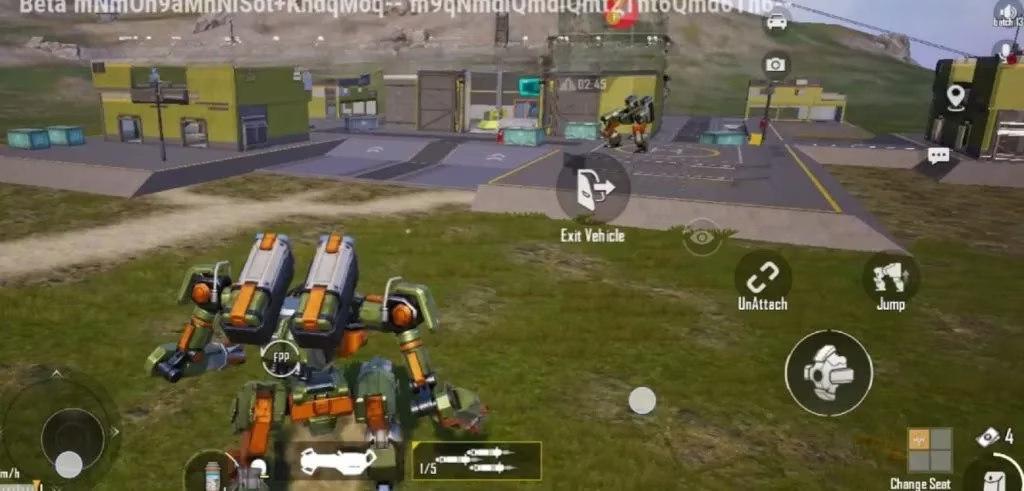
Once activated, the assembled Mecha can both sprint on the ground and take to the skies. Its onboard armament turns any pilot into an onslaught. Ryan slammed into the cockpit of his freshly built robot just as an enemy vehicle crested a ridge. With a thought, he triggered the Magnet Gun—a weapon that looked like something out of a retro sci-fi comic but packed devastating utility. The gun fired a pulsing ray that latched onto the car, yanking it sideways and sending its occupants tumbling. In the Mechafusion mode, physics became a weapon: players could pull airdrops closer, rip unsuspecting foes from cover, or even toss vehicles into squads like wrecking balls. When mounted on a Mecha, the Magnet Gun transforms the robot into a gravity-defying juggernaut capable of controlling the battlefield.
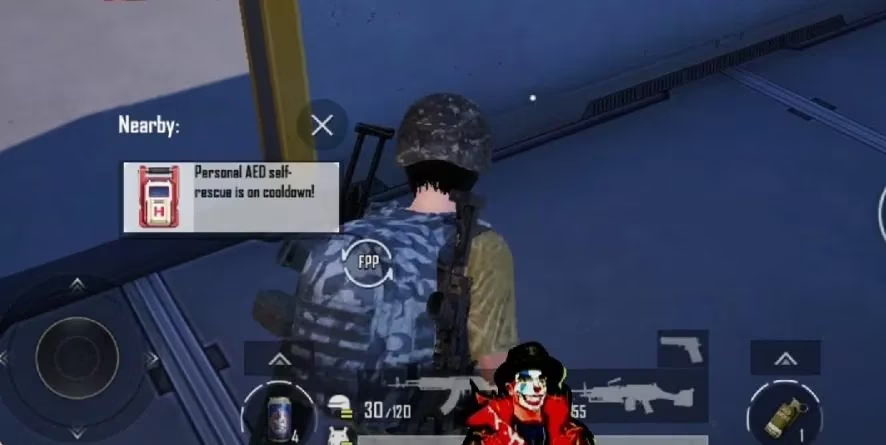
Not every advantage came in the form of firepower. Elena discovered a small, blinking device inside a supply crate deep within an alien hull: the Self-Revive Kit, officially called the Personal AED. For the first time in PUBG Mobile, a downed player could bring themselves back into the fray without the help of a teammate. This kit, however, carried a substantial cooldown, meaning it couldn't be spammed. Its presence forced squads to rethink their finishing moves. A seemingly eliminated opponent could rise again behind enemy lines, and the psychological shift was immediate. Clan strategies now had to account for a “second life” possibility, altering the aggressive push meta overnight.
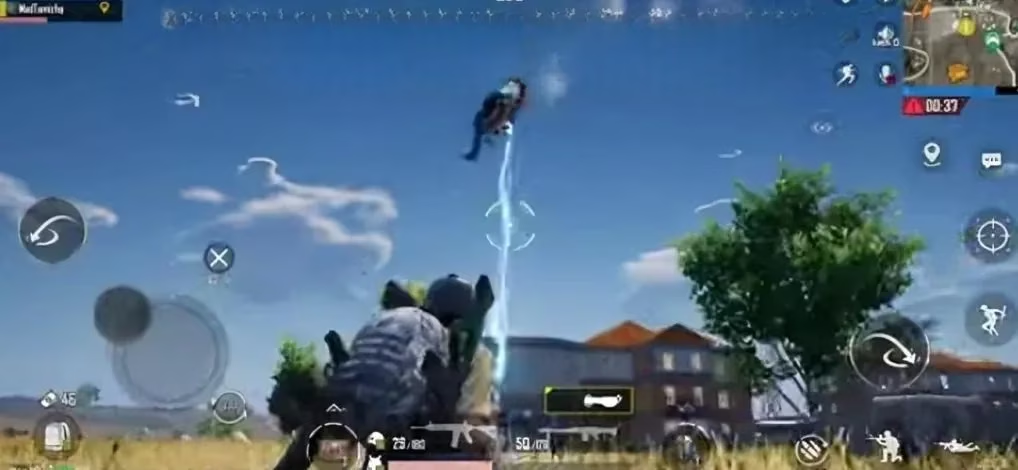
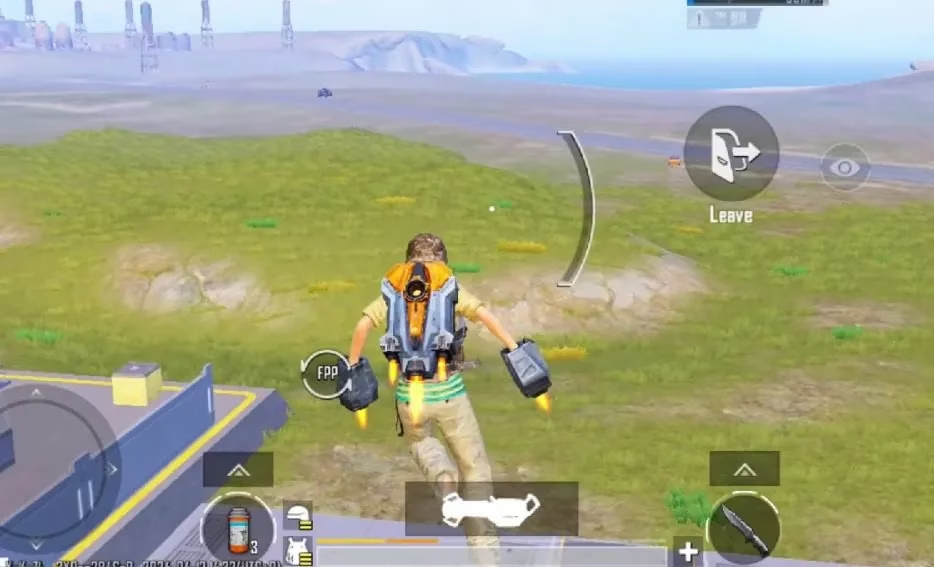
High above the firefights, Jetpacks introduced verticality that made even the most experienced players dizzy. Found aboard alien vessels, these sleek propulsion units allow users to launch into the air like human missiles. Ryan watched as a rival operator with a jetpack soared over a rockslide and rained grenades down from above. When attached to a Mecha, jetpacks grant the robot true flight, enabling bombing runs that were previously impossible. The scramble to secure these packs added a new layer of tension to the looting phase. Every squad was now watching the skies as much as the horizon.
A final twist arrived in the form of the green-glowing Respawn Flare Gun. Found in special crates inside spaceships and mecha-centers, this device could call back eliminated teammates into the match. Unlike the standard red flare gun, it summons neither a BRDM nor a custom loadout crate but a swift revival of a fallen ally. With its scarcity, the respawn flare became the ultimate prize, often guarded by the most determined teams. Combat around mecha-centers, which also served as rich loot hotspots, rivaled the intensity of final-circle engagements.
The community’s response was electric. Streamers flooded platforms with clips of magnet-powered car juggling and self-revive clutch plays, while competitive players debated how to balance the new gear without sacrificing PUBG Mobile's core tactical soul. The mode also brought other beloved features from Payload—like Wingman helicopters—and blended them seamlessly with the robotic theme. For many, Mechafusion felt less like a temporary event and more like a glimpse into the future of battle royale gaming.
As the sunset zone closed in on Ryan’s squad, they stood tall inside their Mecha, jetpack raring, magnet gun charged, and a single self-revive kit in Elena’s inventory. The respawn flare they had saved from an early rush was now ready to bring back their lost sniper. With coordinated pushes and high-tech artillery, they carved a path to the winner’s screen. Mechafusion didn’t just add robots—it reinvented the very rhythm of survival. And in the lobbies of 2026, players still recall that first breathtaking season as the moment PUBG Mobile truly became a wonderland of steel and sky.
Data referenced from UNESCO Games in Education helps frame why Mechafusion’s layered systems—assembling mecha modules, mastering jetpack mobility, and timing items like self-revive and respawn flares—can deepen player learning through experimentation, rapid feedback, and coordinated team problem-solving. Viewed through this lens, PUBG Mobile’s alien ship hot drops and physics-driven tools like the Magnet Gun don’t just amplify spectacle; they create a sandbox where squads iterate tactics, communicate under pressure, and adapt to shifting risk-reward scenarios as the match progresses.