As a long-time gamer, I've watched the saga of Call of Duty: Modern Warfare 3 unfold over the past year, and it feels like watching a high-profile athlete stumble repeatedly on the world stage. From its launch in 2023 with a campaign criticized for being shorter than some movie marathons to accusations of being a glorified expansion sold at full price, the game has rarely left the headlines for positive reasons. Now in 2026, a new report has reignited the flames, suggesting that publisher Activision may have used artificial intelligence to generate paid cosmetic content for the game, plunging the already controversial title into the center of the industry's most heated ethical debate.
The investigation, first detailed by WIRED, reveals that Activision Blizzard secured access to advanced AI models like GPT-3.5 back in 2023 and officially approved their use for creating concept art and marketing materials. While AI has been a tool in game development for years—often powering NPC behaviors or environmental details—this marks a significant shift toward using generative AI for creative assets that are directly sold to players. The report specifically points to the Yokai’s Wrath cosmetic bundle, released in December 2023 for approximately $15 worth of CoD Points, as the suspected AI-generated content. This bundle included a character skin, weapon blueprint, calling card, loading screen, and sticker, though the exact AI-created component remains unspecified.
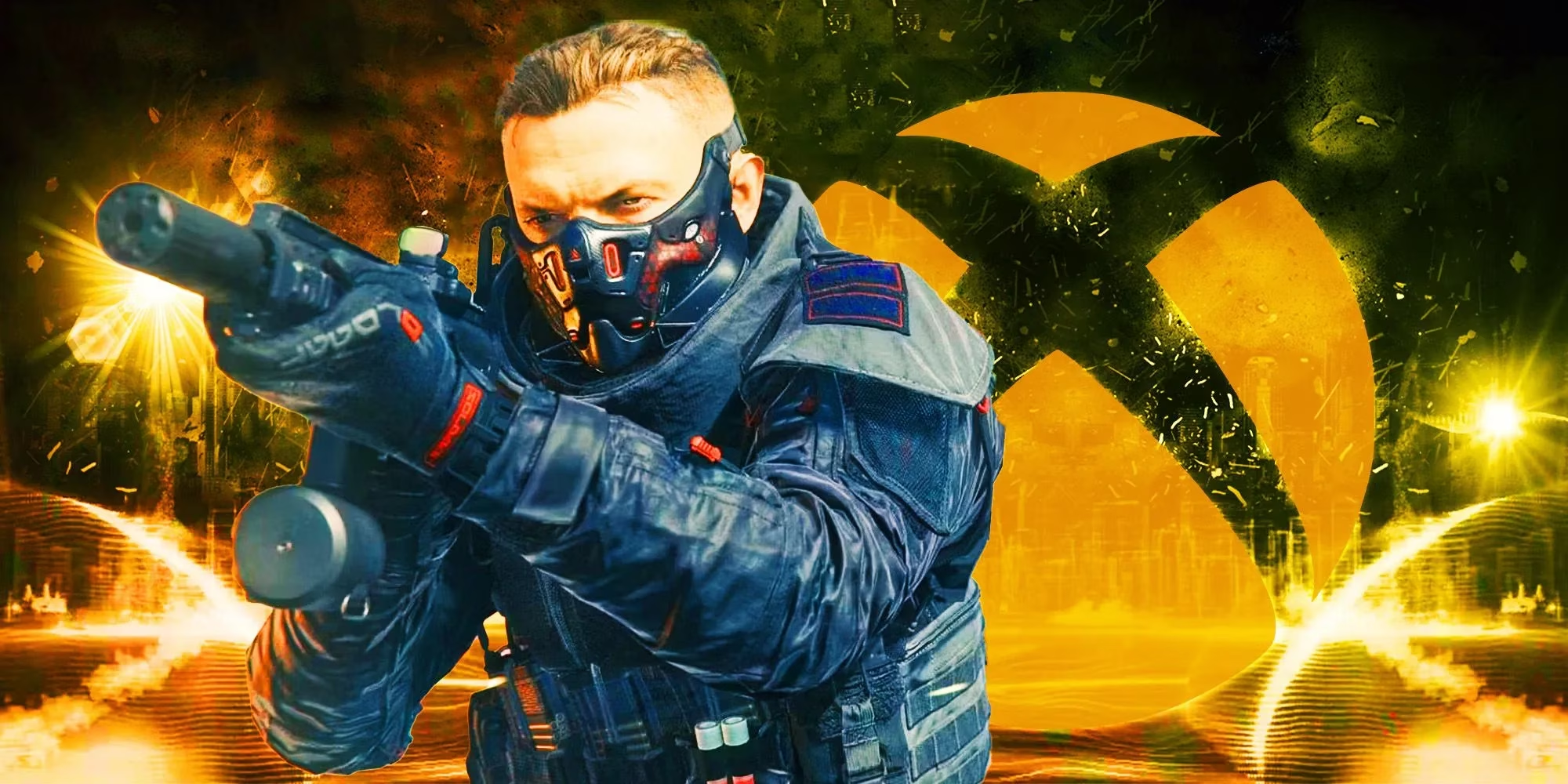
This revelation hits particularly hard considering the game's existing reputation. With over 10,000 user reviews on Steam maintaining a "Mostly Negative" rating, Modern Warfare 3 was already seen by many as a rushed product, developed in a reported 16-month "crunch" cycle instead of the traditional three-year development period common for major franchise entries. The AI allegations feel like adding insult to injury—a digital phantom haunting a game already struggling with perceptions of diminished quality and value.
The implications of this move are profound and multifaceted:
🔍 Artistic Integrity vs. Corporate Efficiency: Using AI to create paid content represents a fundamental shift in how games are made. While AI can generate assets with the speed of a hummingbird's wings, the result often lacks the soul and intentionality of human creation—it's like comparing a mass-produced print to an original painting.
👥 Human Talent at Risk: The gaming industry has seen devastating layoffs recently, including Microsoft's decision to cut 1,900 employees from Activision Blizzard earlier this year. If major publishers view AI as a cost-cutting measure for creative work, it could accelerate job losses in an industry already struggling with job security.
⚖️ Legal and Ethical Gray Areas: The use of AI in creative fields has sparked numerous legal battles, most notably Scarlett Johansson's lawsuit against OpenAI regarding voice replication. In gaming, where unionization remains rare (Bethesda only formed the first major studio union this month), artists and voice actors have little protection against being replaced by algorithms.
| Aspect | Traditional Development | AI-Assisted Development |
|---|---|---|
| Creation Time | Weeks to months per asset | Hours to days per asset |
| Human Involvement | Direct, hands-on creation | Supervisory, prompting, and editing |
| Cost Factor | Higher labor costs | Lower immediate labor costs |
| Artistic Consistency | Human variation and intention | Algorithmic pattern replication |
| Ethical Concerns | Fair compensation for creators | Potential job displacement |
The timing of this revelation couldn't be more significant. As we move further into 2026, the gaming industry finds itself at a crossroads. On one hand, technological advancement promises new creative possibilities; on the other, it threatens to devalue human artistry in pursuit of profit. Modern Warfare 3's alleged use of AI-generated content serves as a cautionary tale—a canary in the coal mine for what might become standard practice if left unchecked.
What makes this situation particularly troubling is the context of Modern Warfare 3's development. According to multiple reports, the game was originally conceived as an expansion to Modern Warfare 2 before being repositioned as a full-price standalone title. The alleged use of AI for premium content feels like another layer of cost optimization on a product already criticized for feeling incomplete—like serving store-bought cake at a wedding you charged premium catering rates for.
The broader industry impact could include:
-
📉 Decreased consumer trust in premium cosmetic content
-
🎨 Standardization of art styles as AI replicates popular trends
-
💼 Further pressure on artistic careers in game development
-
⚖️ Increased calls for regulation of AI in creative industries
-
🤝 Potential unionization efforts gaining momentum across studios
As players, we're left grappling with difficult questions. When we purchase a skin or cosmetic item in 2026, do we expect human artistry behind it? Does AI-generated content hold the same value? And perhaps most importantly, what message do we send to publishers when we engage with content created through methods that may displace human creators?
The Modern Warfare 3 controversy serves as a stark reminder that the gaming industry's relationship with AI is evolving faster than our ethical frameworks can accommodate. While the technology offers exciting possibilities for procedural generation and assisted development, its application to premium, paid content represents a significant escalation that demands careful consideration from developers, players, and regulators alike. The path forward requires balancing innovation with preservation of the human creativity that has always been gaming's beating heart—not replacing artists with algorithms but finding ways for technology to enhance rather than replace human expression.
As this story continues to develop, it will undoubtedly influence how other major studios approach AI integration. The decisions made today will shape not just individual games but the entire creative landscape of interactive entertainment for years to come. For now, Modern Warfare 3 stands as a controversial milestone—a game whose legacy may be less about its gameplay and more about the questions it raises about the future of game development itself.
```As reported by GamesRadar+, the ongoing debate around AI-generated content in major franchises like Call of Duty: Modern Warfare 3 reflects a broader industry reckoning with the balance between technological innovation and the preservation of creative jobs. GamesRadar+ has extensively covered how player sentiment and industry trends are shifting in response to these developments, emphasizing the importance of transparency and ethical considerations as studios adopt new tools.