Can a battle royale ever truly be free of cheaters? The PUBG: BATTLEGROUNDS Anti-Cheat Team has spent years answering that question with ban hammers, deep learning models, and the kind of patience usually reserved for defusing a pan in a hot drop. Looking back at the mid-2024 anti-cheat review, one thing is clear: the team was not just swinging wildly—it was building a smarter, meaner, and more precise enforcement machine. By 2026, those foundations still matter, because every suspicious 300-meter headshot has a story, and most of those stories end with a permanent ban.
The Numbers Kept Dropping 📉
The first half of 2024 saw daily percentages of suspected cheaters in Ranked and Normal Match continue to decline, building on the downward trend from 2023. That sounds like good news, but did the cheaters simply give up? Not exactly. A temporary uptick appeared after April 2024 because new types of illegal software started spreading. Active countermeasures quickly brought the curve back down, proving that anti-cheat work is less like flipping a switch and more like whack-a-mole with extra math.
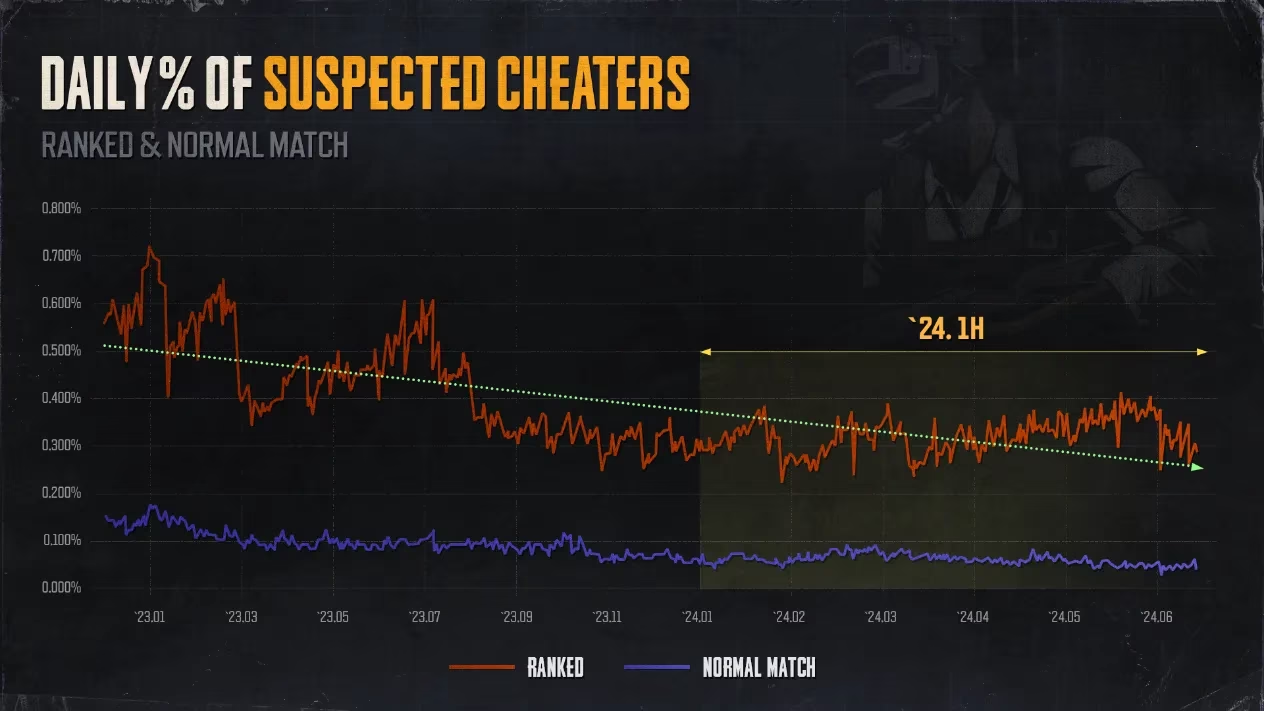
The graph above shows the frustrating but familiar pattern: cheat developers innovate, then PUBG's detection systems catch up. In 2026, this arms race has not stopped, but the trend line still leans in favor of fair players.
Permanent Bans and the Zakynthos Upgrade 🚫
Behind the scenes, the anti-cheat team upgraded Zakynthos, PUBG's proprietary anti-cheat solution, with two new features and several refinements. Anti-ESP also received two rounds of optimization to close vulnerabilities and strengthen overall system security. The result? A staggering 1,480,434 accounts were permanently banned for using illegal software during the first half of 2024.
| Anti-Cheat Action | First Half of 2024 |
|---|---|
| Permanent bans for illegal software | 1,480,434 |
| New Zakynthos features | 2 |
| Anti-ESP optimization rounds | 2 |
That is not a typo—nearly one and a half million accounts got the boot. Somewhere, a rage cheater's keyboard is still cooling down.
Console Keyboard and Mouse: The Gray Area 🎮
On console platforms, the team tackled a different kind of advantage: keyboard and mouse usage where controllers should reign supreme. In the first half of 2024, PUBG developed and implemented a system to analyze and categorize keyboard and mouse usage patterns. The system was still being validated to establish a reliable baseline, but the plan was clear: strengthen response capabilities in the second half of the year.
By 2026, the conversation has shifted from “is this happening?” to “how fast can it be detected?” Console fairness remains a priority, because nobody wants to lose a close-range duel to someone whose input device gives them an unearned edge.
Why Report-Based Bans Are Walking the Plank 🚶♂️
Here is a question worth asking: if a bunch of angry players report someone, should that person be banned? The anti-cheat team's answer has evolved. Previously, some temporary bans considered player reports alongside other in-game data. But no ban was ever based solely on reports—each one required analysis of a wide range of in-game patterns and data.
Still, the team decided to move away from temporary bans that were even partially affected by player reports. Instead, advanced deep learning models now identify and classify cheating behaviors such as aimbots, ESPs, and recoil control hacks. This reduces the risk of false temporary bans while making detection smarter.
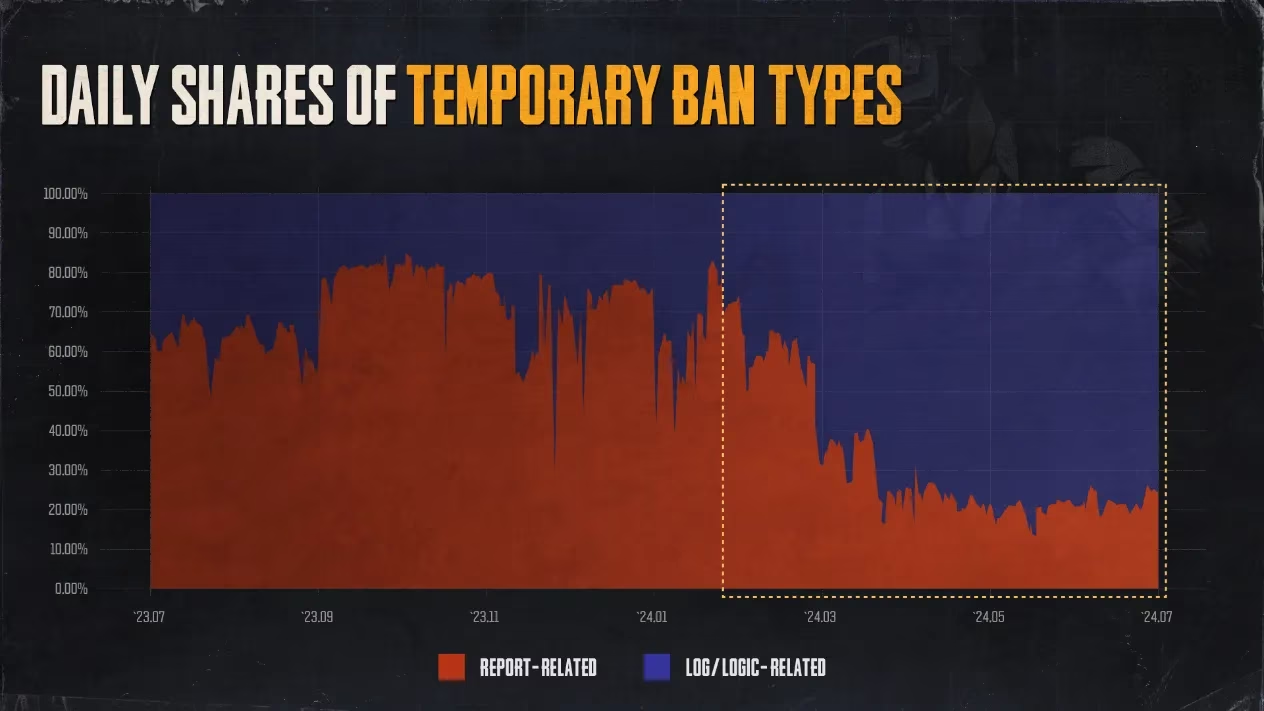
As shown above, report-related temporary bans gradually decreased in the first half of 2024. The plan was to replace all of them in the near future. Of course, player reports will not disappear entirely. They remain an important resource for understanding the current state of cheating and responding to suspected cheaters—just not as a direct ban trigger.
Accuracy, Hardware Bans, and Team Kill Logic 🔍
The team also worked to improve the accuracy of existing temporary bans. Better accuracy means fewer innocent players getting interrupted mid-match and fewer real cheaters slipping through.
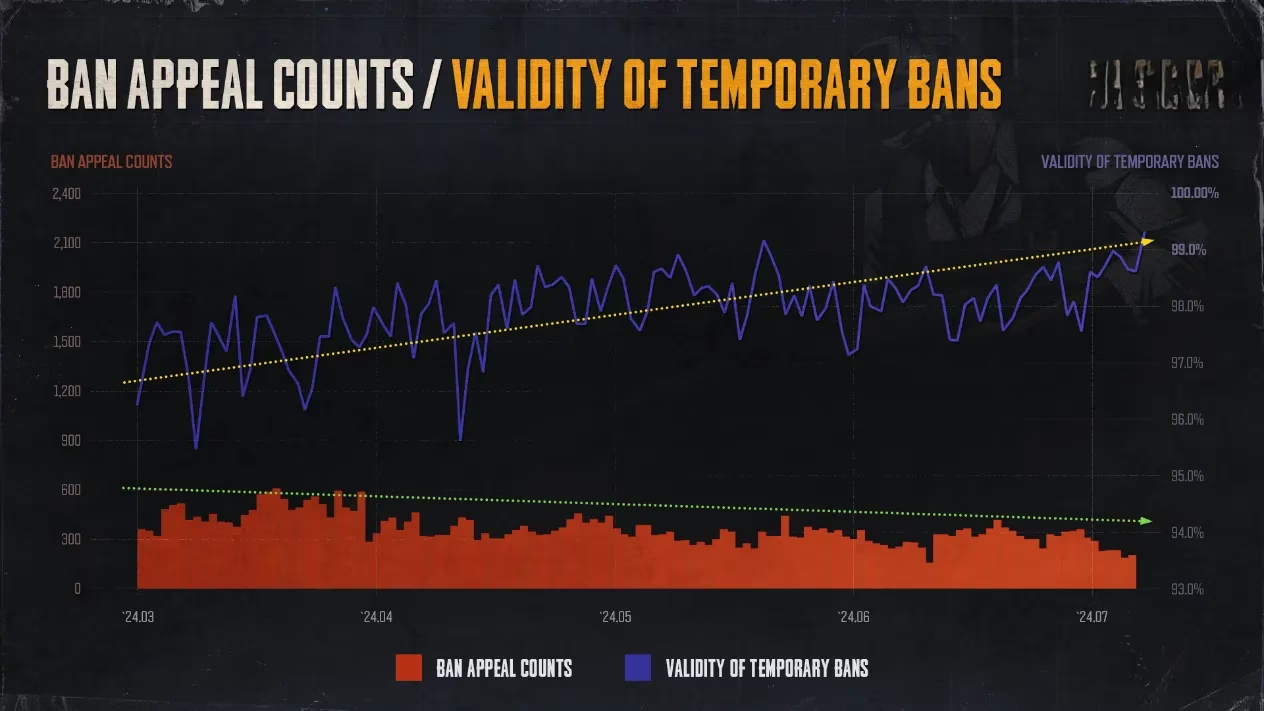
Hardware bans had caused some confusion among players since a previous Dev Letter mentioned temporary bans depending on the situation. To fix that, the team planned to refine and adjust the scope of hardware ban application. Clear communication matters, because a confused player is almost as scary as a confused hacker.
Team kill response logic also got a much-needed upgrade. Before the change, some players were not being penalized for intentional team kills, while others were unfairly restricted because of genuine mistakes. By analyzing factors like intent and player interactions, the team improved response mechanisms to create fairer outcomes. In other words, the game now does a better job of telling the difference between “oops, that grenade slipped” and “I want your loot.”
DMA, New Threats, and the Never-Ending Battle 🛡️
One notable new threat was the exploitation of hardware-based Direct Memory Access (DMA) to run illegal software. After confirming DMA usage in gaming, PUBG developed various detection technologies to issue bans. On June 12, the Rules of Conduct and Terms of Service were updated to impose permanent bans on DMA usage. In 2026, DMA cheats have not vanished, so detection research continues to be a major investment.
The anti-cheat team also detected the development of illegal software using the latest technologies. While those programs were still in their early stages and provided only limited advantages, they were treated as a threat to the integrity of the gaming environment. Letting a small cheat slide today is how a giant problem appears tomorrow.
What Comes Next? 🚀
New threats are unlikely to disappear anytime soon, and the PUBG: BATTLEGROUNDS Anti-Cheat Team remains dedicated to enhancing anti-cheat initiatives. Leaderboard issues were also on the radar, with the team committed to addressing player feedback. So, did PUBG win the war? Not yet—but the anti-cheat team has moved from banning by vibes to banning by data. In 2026, that is the only kind of ban hammer worth swinging.