PUBG is still one of the defining battle royale games out there, and by 2026 it has been around long enough to celebrate its 9th anniversary on PC and 8th on mobile. Whether you're playing on Steam, jumping in from PlayStation or Xbox, or grinding PUBG Mobile on Android and iOS, the core idea stays the same: 100 players drop in, loot fast, survive the shrinking zone, and try to be the last one standing for that classic "Winner Winner Chicken Dinner." If you're trying to figure out how to play PUBG without getting deleted in your first few matches, this guide walks you through the essentials from your first landing all the way to late-game win conditions, using the current 2026 meta as the baseline.
How to Play PUBG Basics
At its core, PUBG is about survival, not kill count. The goal is simple: be the last player or last team alive. That sounds straightforward, but the thing is, every fight comes with risk. If you shoot at the wrong time, you might win that duel and still get third-partied by another team that heard everything.
That is why smart positioning usually matters more than mindless aggression. You do not need a huge number of eliminations to win a match. In a lot of games, the better play is staying alive, rotating early, and only taking fights that actually improve your position.
Game modes change how PUBG feels quite a bit. You can queue into Solo, Duo, or Squad depending on whether you want to play alone or with teammates. Classic mode is the standard battle royale experience, and that splits into Ranked and Unranked. On PC, Ranked requires the Battleground Plus upgrade, and it tracks RP through tiers starting at Bronze and climbing up to Master, while mobile also pushes toward Conqueror at the top end. If you're brand new, Unranked Classic is easily the best place to learn.
Arcade is there if you want shorter, more combat-heavy sessions. Modes like War Mode and Sniper Training are great for sharpening mechanics without committing to a full match. On mobile, the 4.3 update also added the Evolving Universe event mode, which overlays a specialization system on top of normal gameplay and gives matches a slightly different rhythm.
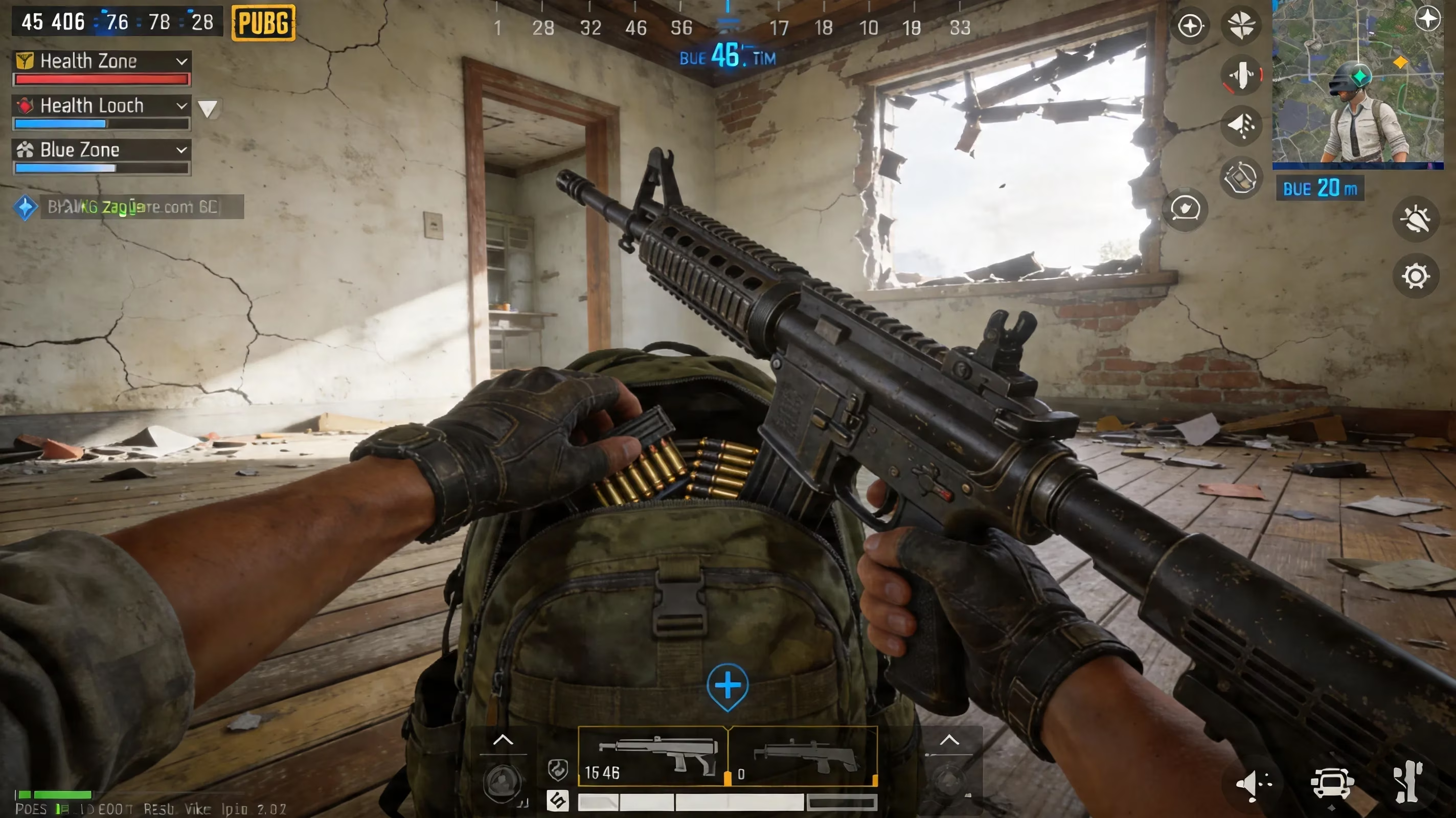
The HUD is basically your command center during a game. You should be checking the minimap, blue zone timer, health bar, boost bar, and weapon slots constantly. If you ignore those, PUBG gets way harder than it needs to be.
| Action | Default PC Key |
|---|---|
| Parachute deploy / cut | F |
| Aim Down Sights (ADS) | Right Mouse Button |
| Fire | Left Mouse Button |
| Crouch | C |
| Prone | Z |
| Peek left / right | Q / E |
| Inventory | Tab |
| Interact / loot | F |
| Map | M |
Console players have equivalent controller inputs, while mobile players can fully customize their HUD layout in the editor. That flexibility matters a lot, especially once you start optimizing for faster looting and cleaner fights.
How to Play PUBG First Match
Your first real decision happens before you even touch the ground. Every match starts with a cargo plane crossing the map on a random route, and choosing where to drop has a massive impact on how the early game plays out. Hot drops like Pochinki or School on Erangel, Pecado on Miramar, and Bootcamp on Sanhok are packed with loot, but they are also packed with players who want instant fights.
If you're still learning, it is usually better to land 500 to 800 meters off the main flight path at a smaller compound or village. You will get decent loot, fewer enemies, and more time to actually understand what is happening. Stretching your parachute for maximum horizontal distance also helps you reach spots a lot of players skip entirely.
The first 90 seconds are all about fast looting. Do not overthink it. Your priority should look like this:
-
Primary weapon
-
Helmet
-
Vest
-
Backpack
-
Ammo
-
Healing items
-
Attachments and grenades
Any AR or SMG is better than running around unarmed. A Level 1 helmet is already valuable because even basic head protection can save you from getting instantly blown up in an early fight. What gets new players killed all the time is looting too slowly, or trying to sort every item perfectly while the first zone is already closing.
Speaking of that, blue zone rotation is one of the first habits you should build. Once the safe zone appears, you need to plan your movement early. A lot of beginners hug the edge too long, take blue damage, then walk straight into players already holding zone. That is pretty much the worst of both worlds.
A much safer habit is rotating with around 60 seconds left or more, especially on bigger maps. If you have a vehicle, use it. Early movement costs almost nothing and often gives you stronger buildings, better sightlines, and way less panic.
For early fights, keep the rule simple: fight when you clearly have cover, back off when you do not. If you get caught in the open, forcing the duel is usually a losing play. Taking heavy damage early with limited meds can ruin the rest of the match even if you survive the first engagement.
PUBG Weapons, Gear, and Loadout
PUBG weapons are split into clear roles, and understanding those roles makes looting much easier. Assault Rifles (ARs) like the M416, SCAR-L, and AKM are the most flexible weapons in the game. They handle close-range sprays well enough and still work at mid-range. SMGs such as the UMP45 and Vector are strongest up close, where their fire rate and handling can overwhelm slower weapons. DMRs like the Mini-14, SKS, and SLR sit in the middle, giving you reliable semi-auto damage from roughly 100 to 300 meters. Then you have bolt-action snipers like the Kar98k, plus the airdrop-only AWM, which can end fights instantly with a clean shot.
Armor matters just as much as guns. A Level 2 helmet is especially important because it protects you from one of the most common ranged threats in the game: the Kar98k headshot. A Level 3 vest, usually found in airdrops, gives a huge bump in body-shot durability. Backpacks are less flashy, but they matter a ton over a full match because more space means more heals, more throwables, and more room to stay alive.
For the 2026 meta, the SCAR-L has become a really strong beginner option thanks to recoil buffs that make it easier to control than the M416 at mid-range. If you want a simple and effective setup, SCAR-L plus Mini-14 is one of the best combinations you can run. The M416 is still one of the most forgiving rifles for learning recoil patterns, and on mobile, the AUG remains a top-tier choice in competitive lobbies whenever you can get it from an airdrop.
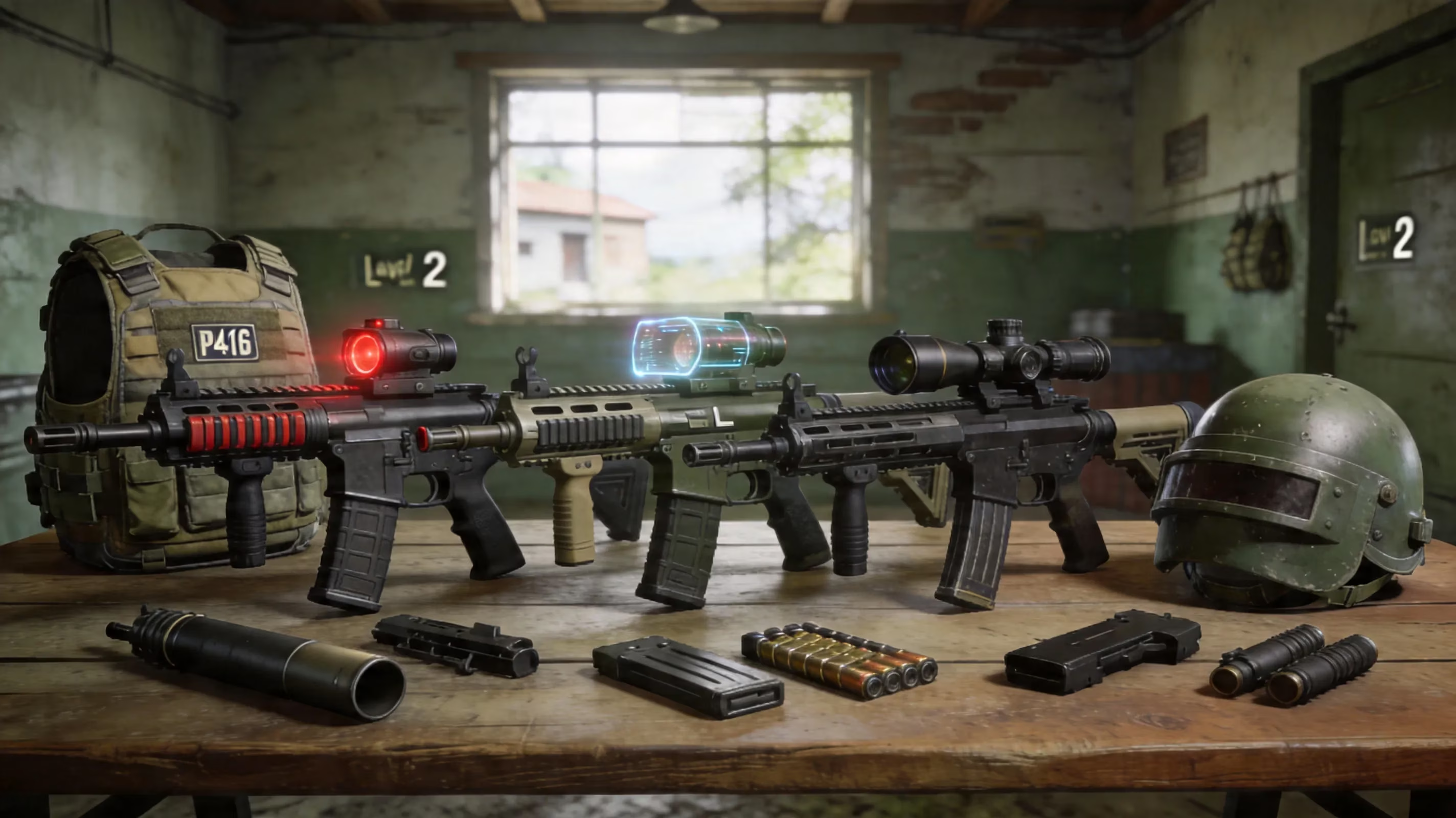
For attachments, beginners should keep priorities straightforward:
-
Compensator: Best muzzle for reducing vertical and horizontal recoil
-
Vertical Foregrip: Easy, reliable recoil control
-
Tactical Stock: Great for rifles like the M416, improving stability and ADS feel
A Suppressor can be nice, but for most newer players it is usually less valuable than the recoil help from a Compensator on an AR. On SMGs or pistols, though, the stealth tradeoff feels a lot better.
Close-range Loadout
Close-range fights in PUBG are messy, fast, and often decided by who lands the first clean burst. The UMP45 plus a pump shotgun is still a very solid beginner combo. The UMP is forgiving, has manageable recoil, and gives you enough bullets to stay calm in a spray. The shotgun, meanwhile, can instantly end a fight through a doorway or tight corner.
This is where peek and prefire really matter. Leaning with Q and E on PC, or using peek buttons on mobile, lets you expose less of your body while still shooting normally. Prefiring corners works for the same reason: you are already sending bullets before the enemy fully swings into view, which can completely throw off their aim.
Push timing is the other big piece. If you are going to rush a room, doing it right after a grenade or flashbang gives you a much better chance of winning. Running in dry against a prepared defender is usually a bad bet.
Mid-long Range Loadout
For most open-field fights, the M416, SCAR-L, and Mini-14 cover almost everything you need. At 50 to 100 meters, spray control becomes the key skill. The M416, for example, tends to pull upward and slightly to the right, so your correction needs to drag down and a bit left to stay on target.
Once the distance goes past 100 meters, tap fire becomes much more reliable than holding a full spray. Firing single shots with a short rhythm, around 0.2 seconds apart, keeps recoil from stacking and makes your shots way more consistent. In 2026, a 3x or 4x scope on an AR is still one of the strongest all-purpose setups for this range.
How to Play PUBG Maps and Positioning
Every PUBG map has its own pace, and if you play them all the same way, you are going to struggle. Erangel is still the best beginner map by far. It has a little bit of everything: open fields, forests, towns, compounds, and enough room to learn rotations without getting overwhelmed. A good beginner route is landing somewhere mid-tier like Georgopol containers or Lipovka, looting up, then rotating west or east depending on where the circle pulls before taking a vehicle into later zones.
Miramar is much less forgiving. The desert terrain is wide open, and moving on foot between compounds is dangerous enough that a vehicle is basically mandatory. If you are on Miramar and you do not secure a UAZ or Pickup Truck early, you are making the match harder for yourself for no reason.
Sanhok is the opposite kind of pressure. It is smaller, faster, and way more chaotic. Fights start almost immediately, many matches wrap up in under 20 minutes, and close-range skill with SMGs and shotguns becomes much more important. If you like action, Sanhok delivers, but it is not the easiest map for learning calm decision-making.
Livik, available on mobile, is built for quick rank sessions. Matches are short, usually around 12 minutes, and the map includes exclusive weapons like the P90. If you're trying to push Ace or Conqueror without spending forever in each game, Livik is one of the best options.
Zone Positioning
Positioning around the zone is arguably the biggest macro skill in PUBG. Edge play means staying near the outer edge of the safe zone. The upside is that you only need to worry about enemies from one main direction, and you can often catch late rotators coming in behind you. The downside is that your movement becomes easier to predict, and players already in zone may be waiting for you.
Center play is usually stronger if your goal is to win. Taking a position near the middle of the current circle gives you a better chance of staying inside the next one, which means fewer forced rotations later. Less movement usually means fewer mistakes.
A few positioning rules are worth memorizing:
-
High ground gives better sightlines and lets you expose less of your body
-
Hard cover like rocks, concrete walls, and vehicle frames is always better than soft cover
-
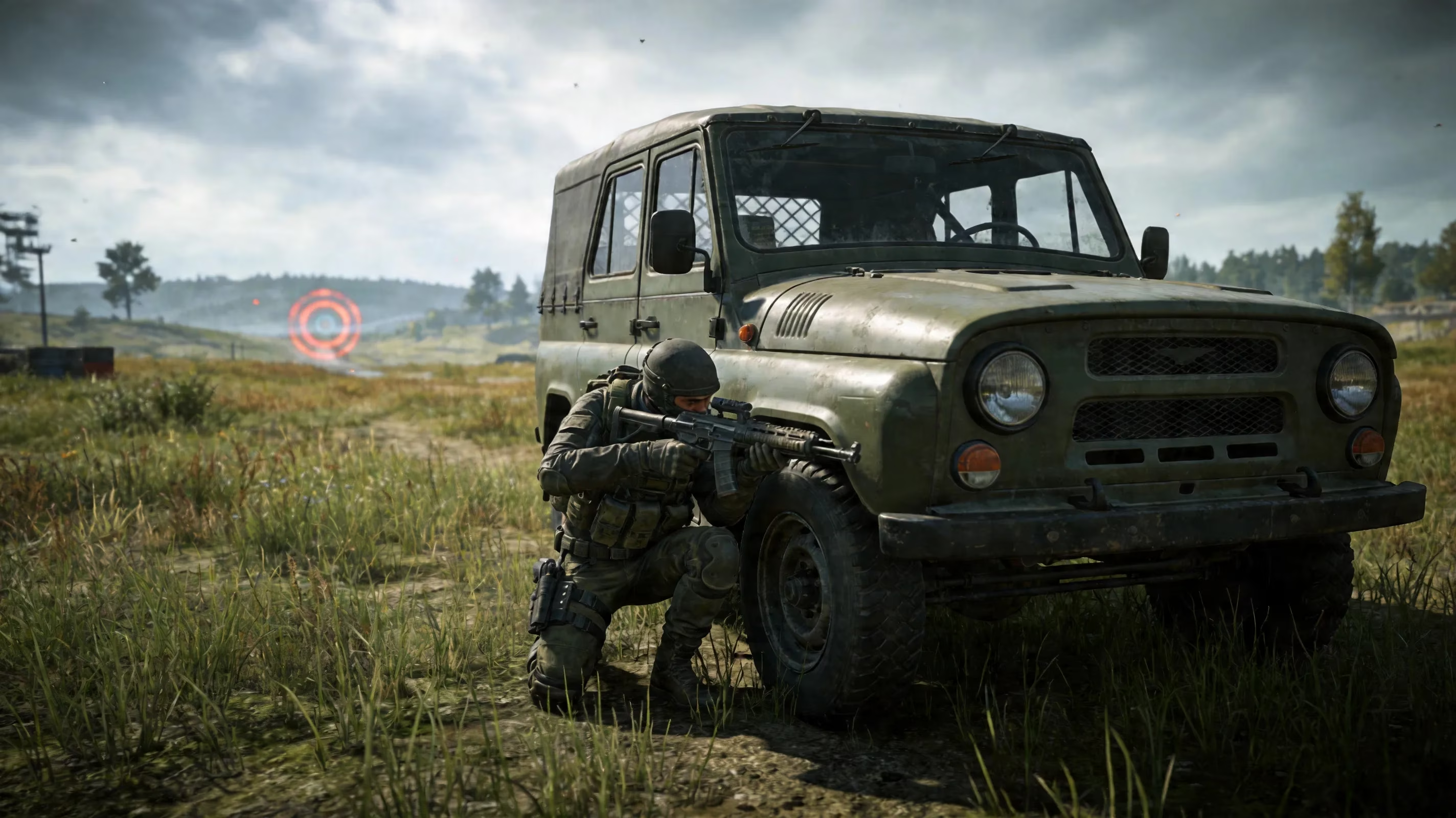
Vehicles are not just for movement; they also work as mobile bulletproof cover
Using a UAZ as cover is one of those simple tricks that wins fights. Park it between you and a sniper, get out on the safe side, and suddenly you have a much stronger angle to work from.
PUBG 2026 Winning Mechanics
If there is one mechanical skill that raises your level the fastest, it is recoil control. On PC, your sensitivity should be tuned so that a full M416 spray at 50 meters stays within roughly two body widths. If it is flying all over the place, your settings or your drag control need work.
On mobile, the 4-finger claw layout is still one of the best setups because it separates camera movement from firing input. That gives you cleaner recoil correction while maintaining pressure. Gyroscope aiming is also huge on mobile. Tilting the device downward to counter vertical climb gives much steadier sprays than relying only on thumb drag.
A solid starting point for gyro settings is:
| Scope | Recommended Gyro Range |
|---|---|
| No Scope / Red Dot | 300–400% |
| 8x Scope | 50–120% |
ADS sensitivity should follow the same general pattern, starting around 100 to 120% on no scope and dropping to roughly 10 to 15% on 8x. You will still need to tweak those based on your device and comfort, but that range is a good place to begin.
Sound cues are another huge part of PUBG that newer players often overlook. Footsteps, reloads, doors, and vehicle engines all give away information before you ever see the enemy. With decent headphones, directional audio becomes a massive advantage and helps you avoid getting jumped for free.
Before ranked sessions, spending 10 to 15 minutes in the Training Ground is honestly one of the best habits you can build. On mobile, WoW creator-made training maps can serve the same purpose. A simple routine works well:
-
Spray a wall at 50 meters and aim for 70%+ hit rate with under 2 meters of spread
-
Track moving targets using a 3x scope
-
Practice close-range peeks and prefires through doorways
That kind of repetition builds muscle memory fast, and it shows up directly in real matches.
The 4.3 Evolving Universe mode on mobile adds another layer through specializations chosen on Spawn Island. You can pick from Combat, Healing, Detection, Recon, or Vehicle, and each one levels from C-Rank to S-Rank through objectives completed during the match. For most players, Combat Specialization and Healing Specialization are the strongest options. Combat gives health recovery after knocks, while Healing speeds up revives and restores bonus health on resurrection. If you want to rank those up quickly, dropping into busy areas like Pochinki or Mylta speeds the process up a lot.
Squad Play Fundamentals
A good squad is not just four players running in the same direction. The strongest teams split responsibilities. The entry fragger is the first one into buildings or compounds, taking the initial contact and forcing space. The anchor stays in a safer supporting position and makes sure the squad does not get wrapped from the side or back. The scout plays a bit wider and feeds information using compass callouts from the minimap.
That structure matters because random all-in pushes are how squads get wiped. If everyone crashes the same doorway with no spacing, one grenade or one defender with a good angle can end the whole fight.
Revive timing is also more important than it looks. Going for the instant revive after a teammate gets knocked is often a trap, because the enemy is usually waiting for exactly that. In most cases, you want to suppress or remove the player who got the knock first, unless hard cover makes the revive completely safe.
A few squad habits make a huge difference:
-
Trade kills: If two players drop each other, a nearby teammate should immediately pressure the surviving enemy side
-
Smoke grenades: Essential for revives and open-field resets
-
Frag grenades: Great for forcing campers out of hard cover
-
Energy Shield: In 4.3, this can block a doorway during a critical revive at S-Rank Vault spots
When squads use utility well, fights become much cleaner and way less coin-flippy.
Conclusion
If you want to learn how to play PUBG efficiently, focus on the habits that matter most. Land away from the main flight path, get a real weapon within 45 seconds, rotate before the blue zone forces you, avoid pointless early fights, and try to hold hard cover or high ground in the final circles. That checklist alone will improve your results fast.
For brand-new players, unranked classic on Erangel in squad is still the best starting point. Squad play lowers the pressure, Erangel teaches the widest range of map situations, and unranked lets you experiment without worrying about RP loss. After that, solo unranked is great for building individual decision-making, and ranked should come once the basics feel natural under pressure.
Getting from your first drop to a Chicken Dinner takes time. Usually a lot of matches, a lot of small mistakes, and a bit of patience. Stick with the process, spend time in Training Ground, review what got you killed, and your results will start looking way better. Happy hunting, survivors.