As the mobile battle royale landscape sails on into 2026, few updates have left as lasting a mark as PUBG Mobile's 3.6 version, which arrived like a carefully folded origami crane in early 2025, carrying layers of Japanese-inspired content that still shape the game today. Rather than simply painting over existing mechanics with a new coat of seasonal festivity, this update wove a entirely new gameplay rhythm into the classic Erangel experience. It introduced the Sacred Quartet theme, a mode that treats each match like an ink wash painting where every brushstroke of elemental power can alter the flow of combat. The centerpiece is a set of four magical abilities, which players select at the spawn island—a strategic prelude reminiscent of a shōgi opening, where the first move already whispers the endgame.
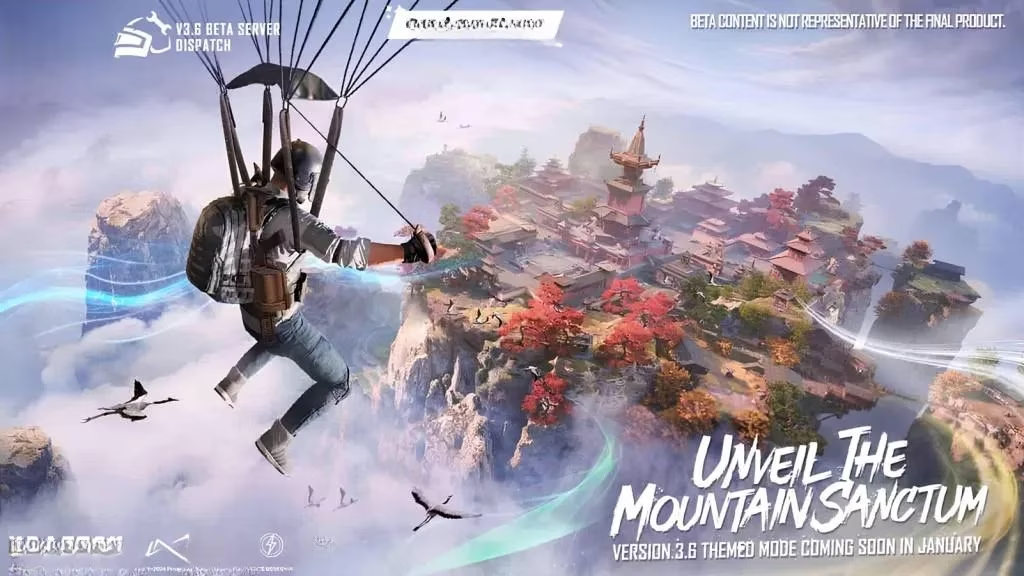
The core engagement of PUBG Mobile 3.6 revolves around the Sacred Quartet mode. It does not stage a final boss spectacle as some previous themed modes did. Instead, it distributes power evenly across a squad, or across solo players, through four distinct elemental callings. Think of these not as simple buffs but as four tuning forks struck at the start—each resonating with a different frequency of aggression, defense, mobility, or misdirection. The choices are:
-
🔥 Hot – Infuses attacks with a scorching damage boost and enables the player to hurl fire projectiles that linger like dying embers, forcing enemies out of cover.
-
💧 Water – Conjures a temporary water shield, a fluid bulwark that rises like a sudden tide to absorb incoming bullets, granting precious seconds to reposition.
-
🌪️ Wind Boost – Calls upon a gale to lift the player into the air, transforming the character into a human kite that soars across terrain at startling speed, rewriting the logics of engagement distance.
-
🦌 Nature’s Touch – Metamorphoses the player into a deer, a four-legged scout that can weave through forests and villages before the player teleports to its location—a spiritual bridge between observation and sudden violence.

This quartet turns every firefight into a layered negotiation. A squad that blends the Water shield with Hot’s offensive projectiles can push a compound as if one player carries a rolling fortress while the other hurls flaming arrows over its ramparts. A scout using the deer form can position itself behind enemy lines and then pull its entire team through space with the teleport—a mechanic that feels less like a conventional battle royale rotation and more like a kage bunshin maneuver dropped into a modern shooter.
The Japanese aesthetic extends beyond mechanics into the very geography of the battlefield. Gone are the sterile military installations; in their place stand vermilion-tinged shrines and wooden pagodas that bend the familiar Erangel terrain into something akin to a dreamscape from the Muromachi period. Cherry blossom petals drift across certain compounds, and the architecture itself suggests a quiet reverence—yet these temples are far from peaceful. They bristle with loot, and their multi-level balconies become vertical kill zones for players who master the Wind Boost.
Hovering above this reimagined landscape are the Nimbus Islands, floating sky platforms that resemble weathered lanterns suspended in a permanent dusk. Hidden chambers and enchanted crates are scattered across these islands, holding rare equipment that tempts squads into risky ascents. Battles here unfold in three dimensions, where a burst of Wind can knock an enemy into the void, and a well-placed Water shield can block a flying vehicle’s strafe run. The Nimbus Islands are not just a side activity; they are a mirror to the elemental system—everything floats, everything is precarious, and only those who master their chosen power truly belong.
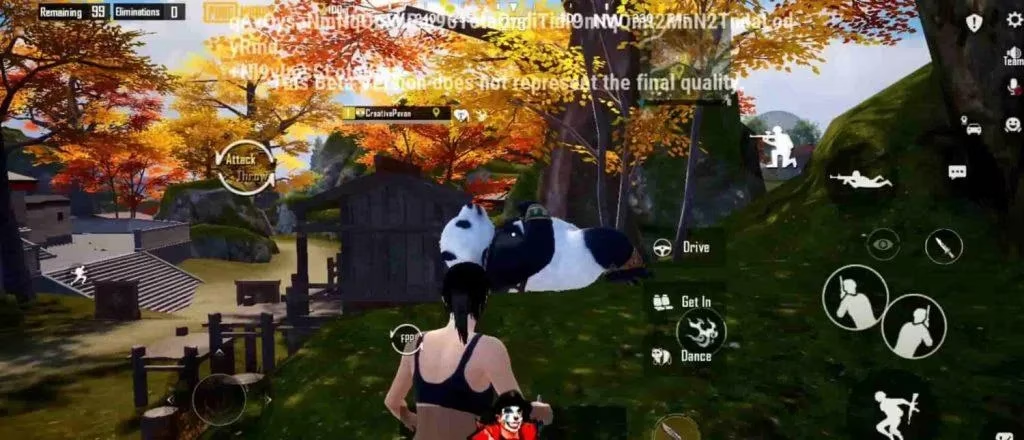
No conversation about PUBG Mobile 3.6 is complete without bowing to the Panda vehicle. In a game that has already given us armored lizards and convertible cougars, the panda feels like a natural culmination—a living, breathing mount that trundles across the map with the gentle solemnity of a sumo wrestler on a morning stroll. It is not the fastest transport, but it offers surprising HP and a hitbox that absorbs damage meant for its rider. Riding this bear into the final circle beneath a sky lit by elemental flares is an image that encapsulates the update’s philosophy: tradition meets chaos, and the line between combat tool and spiritual companion blurs.
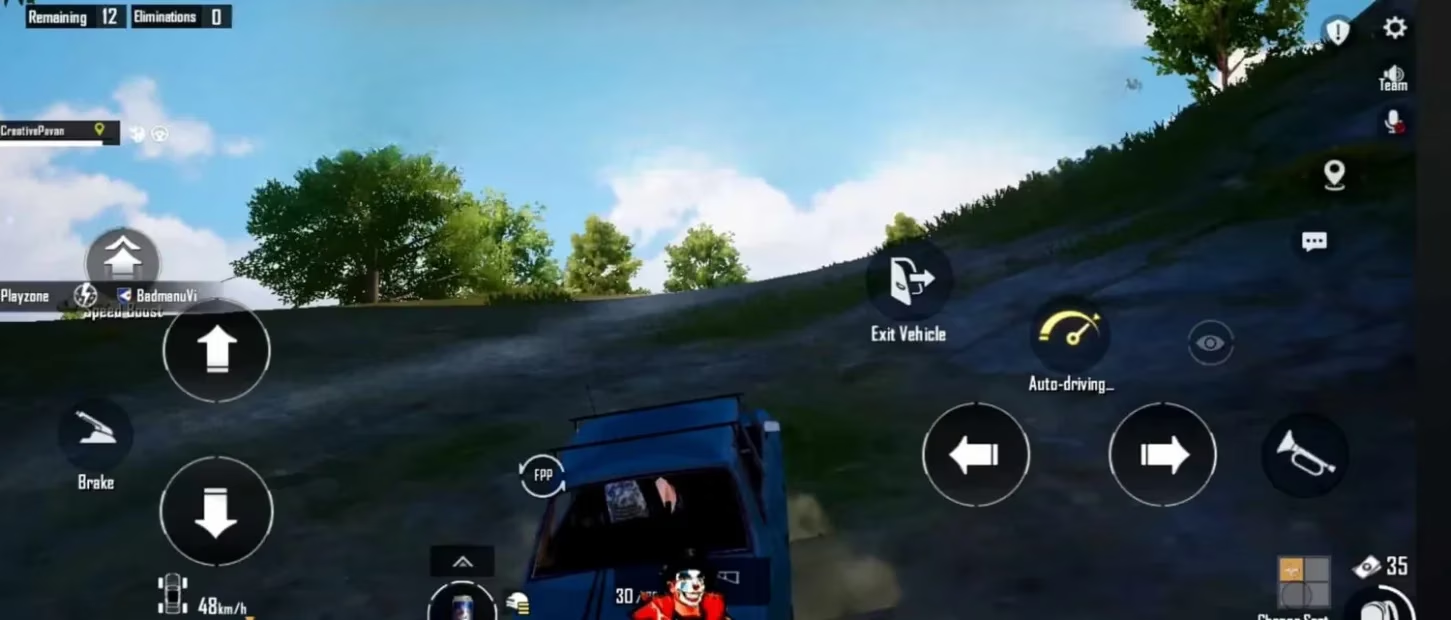
Beyond the themed mode, several classical gameplay enhancements have kept the 3.6 version relevant well into 2026. An Auto-Driving feature arrived like a loyal retainer, allowing players to set a vehicle on a straight path while they scan the surroundings or return fire from the passenger seat. This was not just a quality-of-life improvement; it rewired the dynamics of mobile combat, where multi-tasking had always been a physical challenge. Coupled with refined car drifting mechanics, vehicles stopped being mere transport and became active combat platforms that could circle an enemy squad while passengers unleashed elemental fury.
Visual and audio fidelity received a quiet but tectonic uplift. Japanese temples now reverberate with the hollow thuds of wooden footsteps, and the transformation sequence for Nature’s Touch is accompanied by a spectral chime that alerts nearby enemies—a risk-reward soundtrack. Gun reload animations became more granular, and the shimmer of a Water shield under gunfire looks like ripples in a moonlit pond. However, as this update has evolved through patches, the soundscape has been polished to a mirror sheen, and the initial beta gaps (like missing sound effects on some stages) have long since been filled.
The Sacred Quartet mode, the panda mount, and the floating Nimbus Islands do not just form an update—they constitute a design philosophy that PUBG Mobile has continued to explore. They demonstrate that a battle royale map is not merely a canvas for gunfights but a living tapestry that can be rewoven with folklore, elemental risk, and vertical surprise. For players stepping into the game in 2026, these features are no longer novelties; they are foundational layers that turned a good version into a memorable one, proving that when a shooter embraces the quiet beauty of a Japanese scroll and arms it with fire, water, wind, and deer, the result is not just competitive—it is enchanting.