In the ever-turbulent world of Battlegrounds, the year 2026 dawned not with a whisper, but with a determined roar. The development team, having navigated a year of bold experiments—from the icy whispers of Erangel: Subzero to the crumbling dirt of destructible terrain—stood at a crossroads. The ninth anniversary was more than a celebration; it was a deep breath before a leap. The promise was simple, yet daunting: deepen the essence, expand the experiences, and build stronger trust. The path to the tenth anniversary and beyond was being repaved, and it would start by making every player feel like they were walking through a living, breathing story.
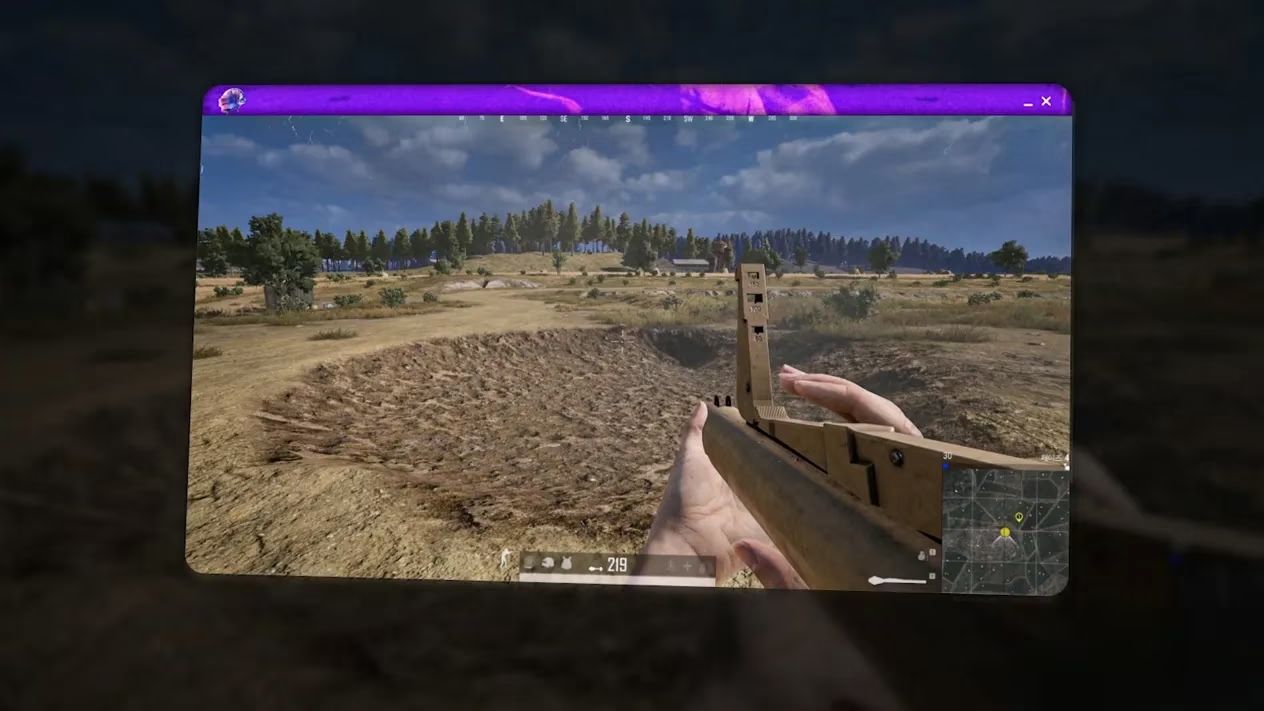
Imagine dropping into Erangel in April. For years, the endgame often became a tense but passive dance on open ridgelines, where luck sometimes felt like the third squad member. Then came the update that made the earth itself a tool. The destructible terrain feature, no longer a teaser in select spots, spread across Erangel and Ranked matches. Every explosion now carves a new scar, a personal foxhole, a makeshift trench that wasn’t there a moment ago.
“Man, I can actually dig in now,” a veteran might murmur, as a frag grenade rips open a shallow crater in a wheat field, turning a predictable death trap into a clutch play. The field of pain transformed into a canvas for proactive strategy, a place where the ground itself tells the tale of the fight. It was the same beloved map, but it had learned to breathe.
Meanwhile, Miramar’s arid silence was broken by the click of a hidden latch. Secret Rooms, those whispered legends of loot, finally appeared across the desert. Tucked into locations that respected the map’s dramatic verticality, they offered a reason to stray from the usual routes without upsetting the core survival rhythm. The strategic looting game just got a whole new chapter, even in the high-stakes world of Ranked.
But it wasn’t just the ground that was changing; the air itself felt different. Smoke grenades, the oldest trick in the book, developed a personality. The new Interactive Smoke behaves like a physical beast—it sways with the wind, it recoils from blasts. No longer a lazy, static wall, it’s a living thing that you can manipulate or panic when a grenade disperses your cover. You know, the kind of panic where you were sure you were hidden. Gone.
Added to this were the Blue Chip Towers, now able to call in items from the sky, and a leveled Jammer Pack, broadening the toolbox for squads who think three steps ahead. Every familiar tool was suddenly holding a fresh ace.
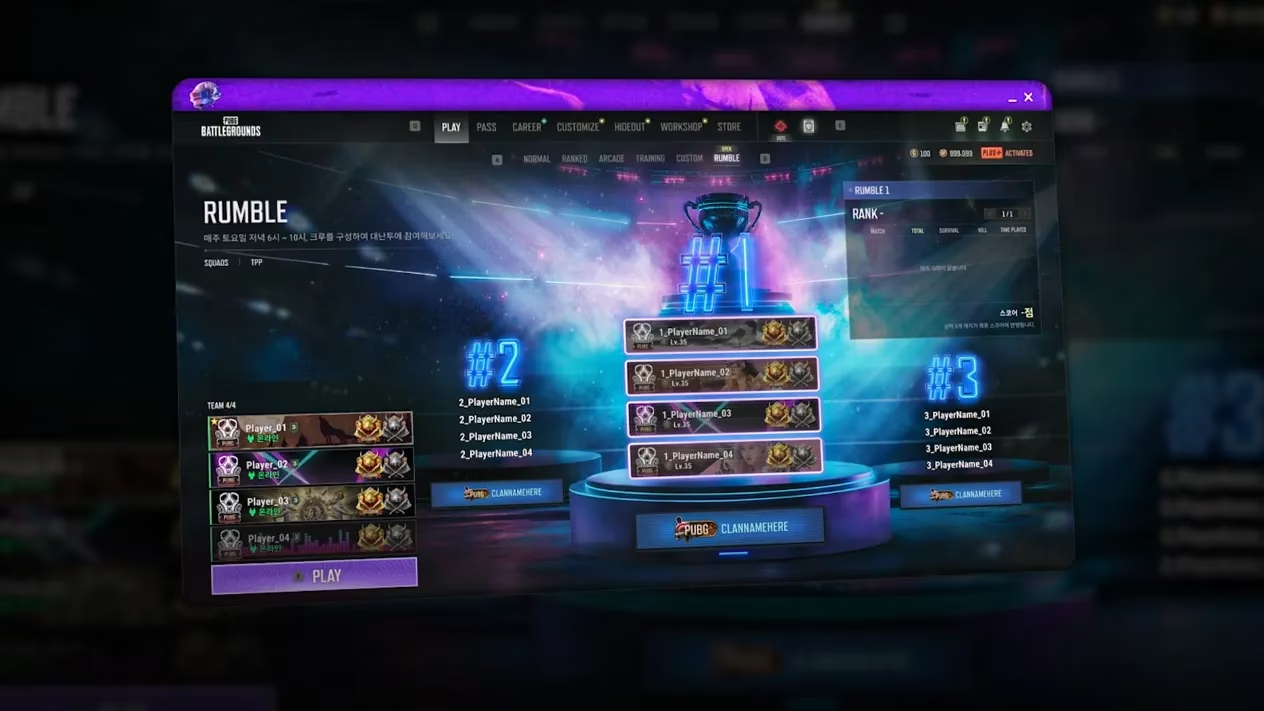
But what’s a battlefield without a stage to show your worth? The team understood that the space outside the match—the lobby—needed to feel less like a waiting room and more like a hall of fame. Enter Rumble, a weekend warrior’s paradise that launched for squads craving Ranked intensity without the number on a tier. The top three squads each week would see their names etched in the lobby, a rotating monument to temporary dominance. It was the perfect answer for those who muttered, “I could win if it wasn't for the pressure.”
In the latter half of the year, a new ranking system promised to reflect not just your results, but your identity—your maps, your weapons, your style. An integrated medal score would turn your passion into a legacy, and a Challenge system would tie in-match performance to exclusive skins. The hours spent in the Battlegrounds would finally be visible, a story told in data and design.
For those who wanted a break from the circle’s closing walls, the Arcade expanded into a dopamine-packed playground. Beyond the April addition of a stress-free, hangout mode, Team Deathmatch and Intense Battle Royale prepared for regular twists. The game was becoming a festival of options, matching every mood, every situation.
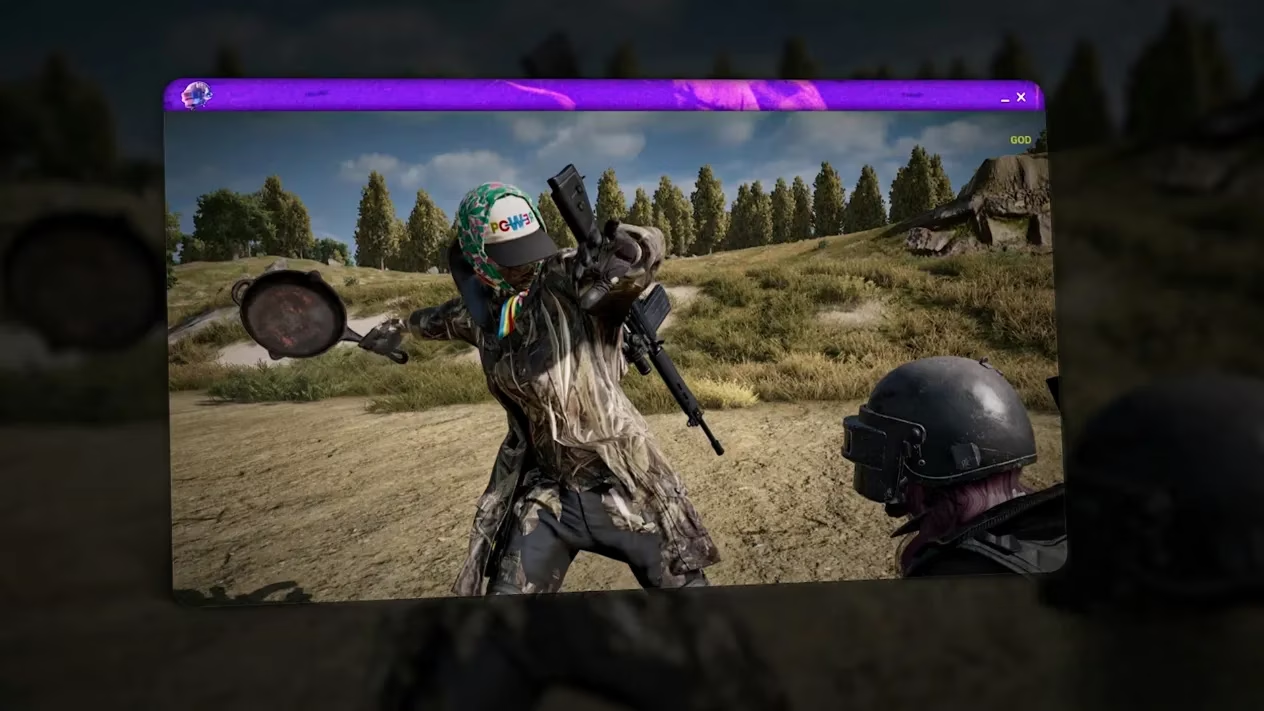
Then came the stylish, brutal punctuation of combat: Executions. Starting in May, a downed enemy could be finished off with a melee weapon in a bespoke animation, one that was purely PUBG—weighty, impactful, a flourish that screamed dignity in the dirt. Melee weapons, long relegated to desperation swings, found a new role as the ultimate exclamation point on a fight. It was a cinematic moment where the survivor authored a memory.
Underpining all of this was a gunplay philosophy that had learned from the MP5K and VSS dominance of 2025. The 2026 approach was built on intentional meta rotations. Every four months, a seasonal shift would crown new heroes. No more eternal reigns. “Remember that season when sniper rifles were insane?” would become a common recollection. Between these seasons, regular balance patches kept the ecosystem humming, and if a weapon ever became a monster, it would be slapped down immediately, schedule be damned.
April would also bring the iconic Hybrid Scope and Tilted Grip, while August promised a powerful new weapon to shake the foundations. But the team was also brave enough to prune the garden: underused guns would be removed in June, making room for the new. Looting was sacred, and cluttered ground loot was not the path forward.
The Ranked journey itself transformed. No longer a simple grind, survival time carried more weight toward your RP, and consecutive top-four finishes or back-to-back Chicken Dinners earned bonus points. The climb became a connected story, not isolated matches. A larger overhaul loomed on the horizon, aiming to make every season feel truly distinct and memorialize your milestones for years to come.
Out-game, the Contenders like Hanna and Dorian finally embraced their unique identities, with a mix-and-match system granting freedom to combine hairstyles and outfits. The Event Pass model, energized by last year’s Skibidi Toilet crossover, would fire on all cylinders around new modes and esports events. Crucially, after years of player fatigue with the gacha layers, a new, transparent system would be piloted—no double probability, tested for both sustainability and genuine satisfaction.
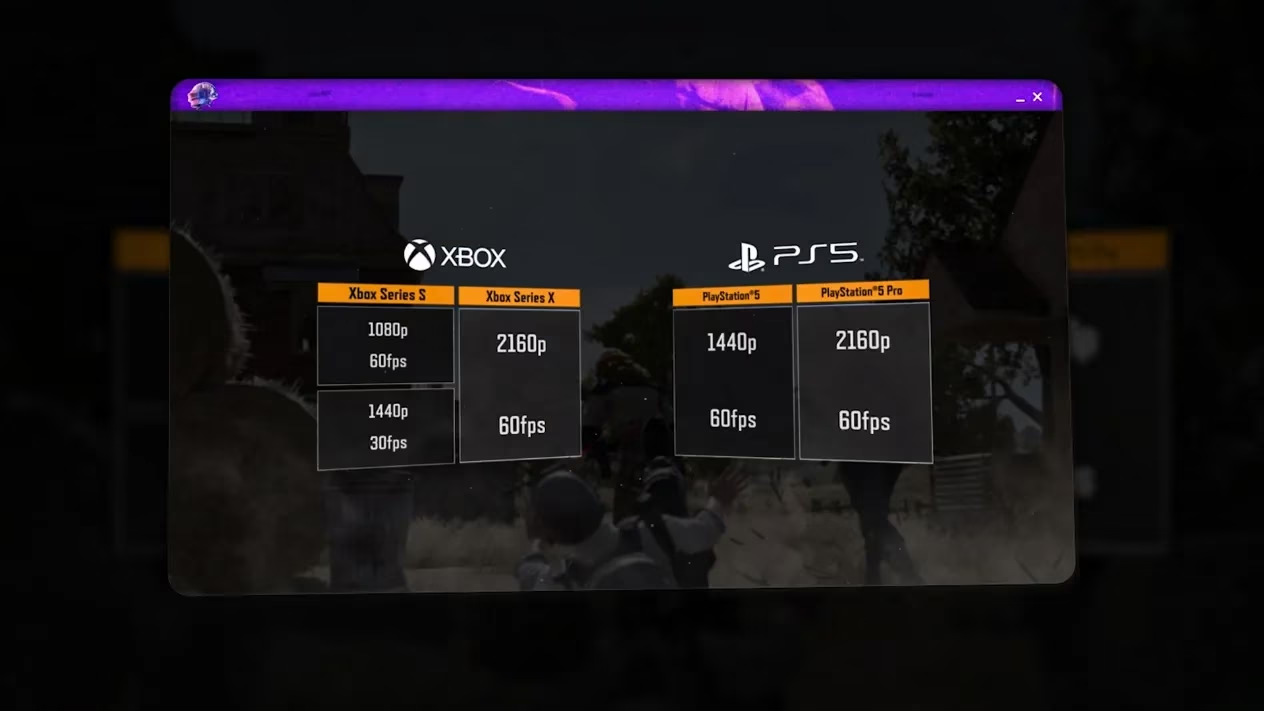
For the fresh arrivals, a redesigned tutorial with a partner bot and step-by-step onboarding missions promised to swap the sting of “this is too hard” with the glow of “I can survive this.” The current-gen console experience also received a performance boost, aiming for higher FPS and a smoother gateway for newcomers to fuel healthier matchmaking.
But the wildest experiments lay in PvE. The co-op heist mode PAYDAY demanded planning, stealth, and role division, layering a thriller’s heart onto PUBG’s gunplay. A winter project, still shrouded in mystery, promised a completely different flavor of fun, showcasing just how far the core action could stretch.
UGC, having proven itself with parkour maps and esports training ranges, would deepen its tools, allowing more rules, more devices, and greater scale. A dedicated space would finally serve community modes directly to players, closing the loop from creation to consumption.
IP collaborations planned to move beyond simple outfits, weaving beloved characters into the survival narrative with unprecedented depth. And for the fans who lived for the roar of the crowd, PUBG Fantasy would debut at PNC 2026—a chance to build rosters, strategize, and compete on a global leaderboard, turning spectators into participants.
Through every new crater, every earned medal, every styled execution, the message was clear. PUBG in 2026 was a behemoth learning to dance, a veteran opening new doors, a challenge whispered in every bomb crater’s hollow. The ground had shifted. The story was just getting good.