Last week, I was one of the few people on Earth who got to sprint through de_transit, Counter-Strike 2's newest Wingman map, before it was erased faster than a teenager’s browser history. For roughly 48 glittering hours, four community-crafted maps — Transit, Golden, Palacio, and Rooftop — joined the official rotation, plucked from the workshop like rare orchids being invited to a royal garden. Then Transit wilted. Overnight, it was gone, leaving only a perplexed SteamDB note and a trail of awkward developer confessions. I’ve seen CS2 drama before (and I’ve paid my therapist to forget most of it), but watching a map get yoinked because of a hidden racial slur is like discovering your favorite artisanal cheese was made with a splash of coolant.
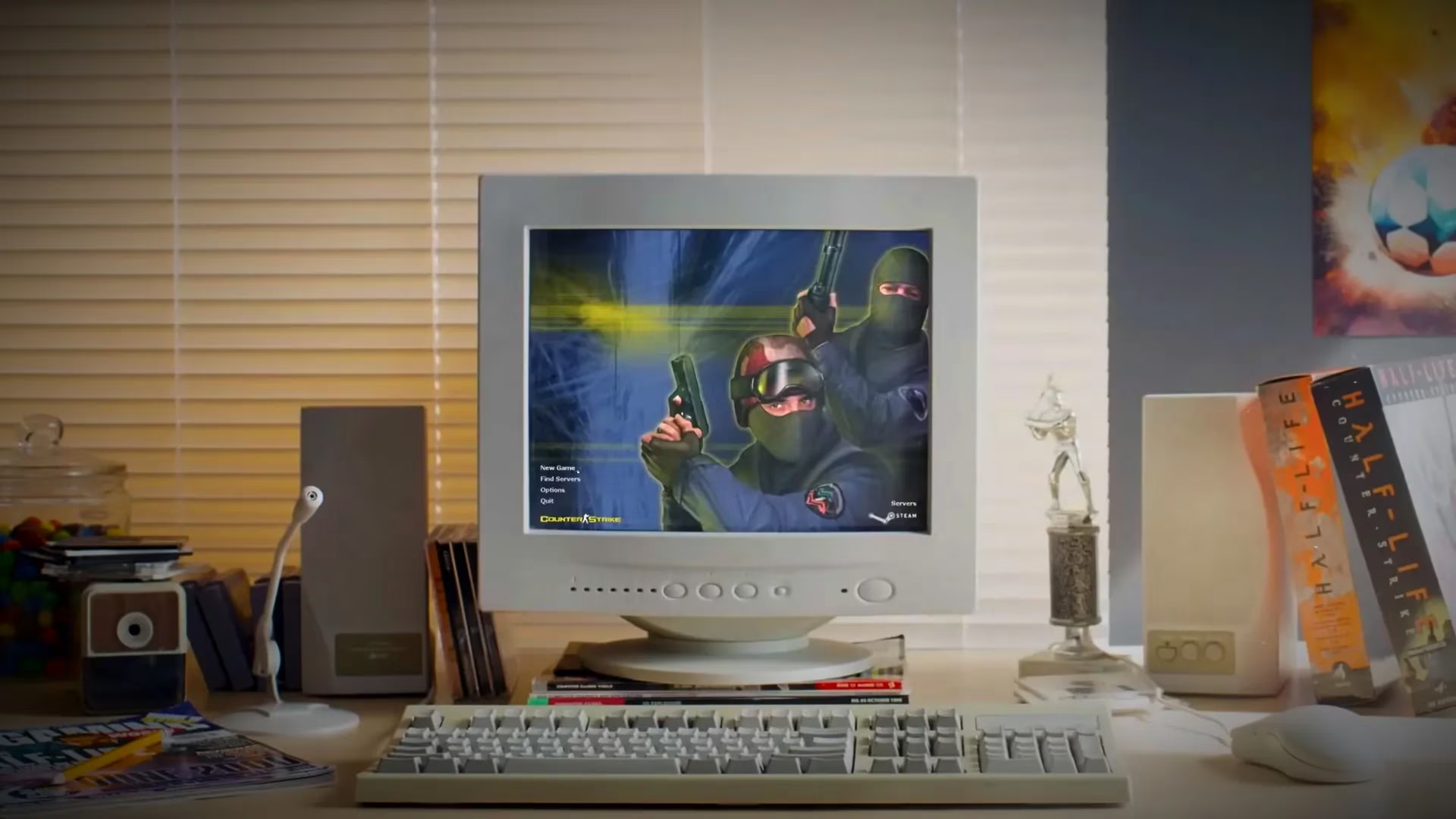
The timeline reads like a heist that tripped over its own shoelaces. On October 6, 2025, Valve dropped a news blast celebrating four community maps going official. The CS2 scene buzzed; Transit was tagged for Wingman, and early impressions gushed about its tight angles and a mysterious tribute to the cat simulator Stray. I booted it up with my usual squad, and for a fleeting moment, it felt like the good old days — until we all sensed something a little off, like a pianist playing a beautiful sonata with one finger always hovering over a jarring C-sharp. Two days later, the map disappeared. No patch note fanfare, just a digital puff of smoke. The SteamDB account (not Valve, but our unofficial canary in the coal mine) tweeted the diagnosis: "One of the maps, Transit, has been removed due to potential copyright issues and one of the entity names having a gamer word."
A "gamer word." That euphemism has become a linguistic grim reaper ever since a certain YouTuber blurted out the N-word during a live stream in 2017, hastily rebranding it as a "heated gaming moment." In the CS2 mapping community, the phrase now carries the weight of a curse. When I dug into the forums, the prevailing theory was that the slur wasn’t plastered on a billboard, but woven into the backend code like a malware hidden in a lullaby. An entity name — one of those developer-side tags that tells the game engine what an object is — had been left with a repugnant "joke" that nobody noticed until Valve’s scanners finally sneezed.
The real gut punch? The map apparently contained an Easter egg tribute to Stray, where touching four hidden posters unlocked a fifth with a wholesome surprise. It’s the kind of detail that makes community maps sing. But behind the curtain, a single entity name sabotaged the entire concert. One mapper, going by Rikuda on Discord, fell on his sword: "I want to say it was my fault. That entity was just a joke that I forgot to rename. I won't make any excuses, I just want to apologize to everyone. That's all." Seeing an artist publicly kneel because they forgot to erase a toxic doodle in the margins is excruciating, like watching a pastry chef realize too late they baked a wedding ring into the cake.
There’s also the murky copyright angle. Some players claim a building in Transit bore an uncanny resemblance to a structure from Phineas and Ferb — yes, the Disney cartoon. While nods to pop culture are as common in CS2 maps as dust motes in a sunbeam, Valve has grown twitchy about legal gray zones. Combine that with the gamer word fiasco, and you’ve got a recipe for instant deletion. It feels like stepping on a rake and a banana peel simultaneously.
As a professional player who’s spent more hours in CS2 than in actual daylight, this debacle stings. I’ve seen malicious code, troll remakes, and texture thieves, but rarely have I witnessed four other environment artists’ careers get kneecapped by a single entity name. The Transit team was a group of five; one mistake dragged everyone into the void. The CS2 mapping community, which already operates on the generosity of unpaid passion, now has to add "bribe a proofreader or risk annihilation" to the checklist.
Still, if there’s a lesson here beyond "triple-check your entity names," it’s that Valve’s curation pipeline remains as fragile as a house of cards in a hurricane. We talk endlessly about CS2’s gambling-adjacent skin economy (looking at you, $20,000 sticker sets), yet a map can be Thanos-snapped for a single offensive string. The irony? Valve itself argues that opening cases is fine because "people enjoy surprises." Well, I didn’t enjoy this surprise.
Transit is now a ghost, replayable only in memory and the few YouTube videos uploaded during its brief breath. For those of us who savored it, it joins the sad list of CS2’s might-have-beens. And for mappers everywhere, it’s a haunting reminder that the nerdiest of easter eggs can hatch a dragon. Check your code, kids — and maybe don’t use gamer words, even as a joke, especially when you’ve got four colleagues’ dreams riding on your commit message.