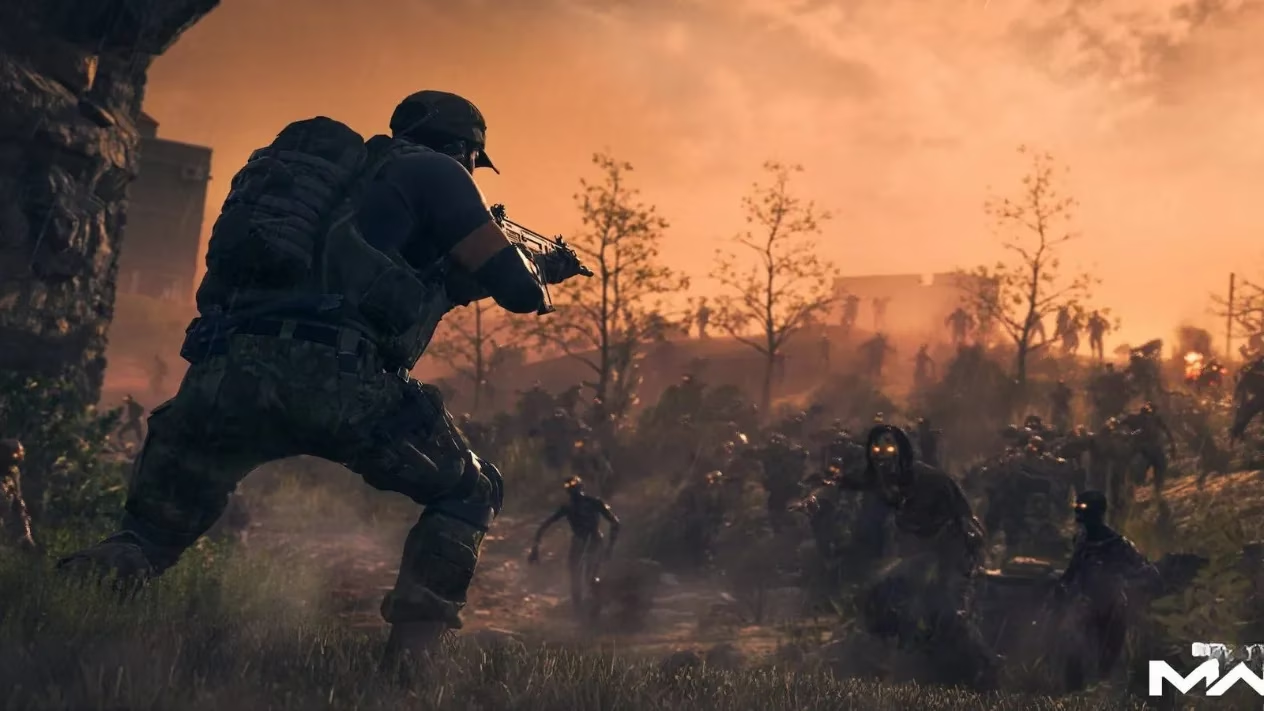
When Call of Duty: Modern Warfare 3 Zombies—lovingly abbreviated as MWZ—landed back in 2023, it felt like Treyarch had handed the community a piñata stuffed with controversial decisions. The shift from claustrophobic round-based survival to a sprawling, 24-player extraction shooter in an open-world Urzikstan sent traditionalists into a tailspin. But the loudest howls of anguish weren’t reserved for the DMZ bones or the persistent loot; they came from the absence of a grand Easter egg quest, the kind of multi-step, brain-twisting, hours-long puzzle that had become the mode’s sacred ritual. Three years later, in 2026, as MWZ’s seasons have bloomed into a weirdly satisfying narrative vegetable garden, it’s clearer than ever that skipping the launch-day main quest was not a betrayal of the hardcore faithful but a surprisingly sane design choice—like removing the dessert course from a buffet already buckling under the weight of twenty-four hungry diners.
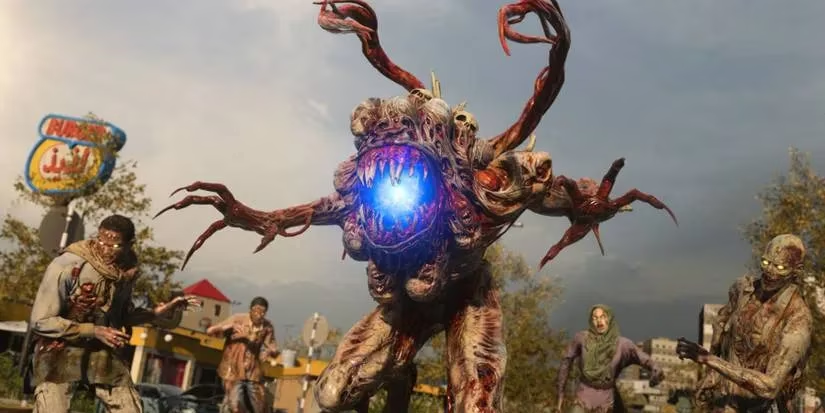
The core of the issue was never that Treyarch hates secrets. Quite the opposite. The studio promised a treasure trove of hidden ciphers, environmental storytelling, and smaller-scale enigmas scattered across Urzikstan. The problem was the traditional Easter egg, that glorious collaborative fever dream where the entire community crowds into Reddit threads and Discord servers to decrypt glyphs, bash glowing rocks in a specific order, and eventually trigger a cutscene that melts a whole server’s collective brain. Forging such an experience inside MWZ would have been like trying to stage an elaborate flash mob inside a subway car during rush hour. With matches capped by an extraction timer, the average casual squad would barely have time to pack-a-punch their weapon and wonder why the sky turned purple before the Aether Storm booted them out. And the persistent loot system—while a looter’s delight—would have turned any quest into a checklist that rich players could breeze through on day one, armed to the teeth with legendary wrenches and golden armor plates.
Then there’s the 24-player beast in the room. Coordinating four players for a Shangri-La or Moon Easter egg run was already an exercise in herding cats that had just chugged espresso. Scaling that up to two dozen strangers, half of whom are probably trying to exfil with a single can of beans while the other half are chasing a Mimic in circles, would be a social experiment worthy of a psychology PhD thesis. Even a private lobby of 24 veteran zombie slayers is a logistical nightmare—someone always has a cousin who needs to join, and suddenly you’re one short of the required sacrifices for the Soul Box step. Treyarch could have designed squad-specific quests, but then the impact evaporates; a giant boss cannot erupt from the ground without disrupting the other eighteen players’ experience, turning their extraction run into an uninvited kaiju fight. It would be like asking a dozen chefs to each cook a course for the same table without knowing what the others were preparing—the result plate would be a chaos omelette.
Instead, the developer poured its narrative heart into an episodic structure, releasing story-driven missions with each new season. This approach, still rolling forward in 2026’s later seasons, transformed the mode into a living comic book where operators can drop in, tackle a focused objective, watch an emotional cutscene, and extract before the neighbors even notice they’ve been gone. For the enormous slice of the fanbase that never actually completed a classic Easter egg and only watched the ending on YouTube while eating cereal, this was a quiet revolution. The missions offered the same high-stakes storytelling but without the need to memorize a forty-step guide and pray to the RNG gods for the right character quote. It’s not the same as the shared frenzy of a global hunt, but it’s a far cry from the hollow, quest-free months that plagued Outbreak’s early life.
A common fear in 2023 was that MWZ’s silence on a main quest meant a barren narrative wasteland. Three years of updates have proven that worry about as accurate as a blindfolded GibsMe dataminer’s first leak. The mode’s story has twisted through betrayals, revelation-filled intel drops, and genuinely poignant moments that landed harder than a Hellhound pounce. Treyarch essentially traded the single, explosive finale for a slow-burn fireworks display spread across the calendar. It’s an approach that respects the extraction reality: instead of cramming a three-hour puzzle into a forty-five-minute window, the game delivers bite-sized narrative chunks that players can actually digest before the timer runs out or their internet connection betrays them.
Some veterans still cling to the hope—now more of a nostalgic pixel on the horizon—that a traditional endgame Easter egg will someday unfurl in Urzikstan’s irradiated corners. But like waiting for a Zombies Chronicles 2 bundle that includes every map ever dreamed, that fantasy remains delightfully improbable. Treyarch has clearly accepted that MWZ is a different animal, a creature that thrives on accessibility and incremental lore drops rather than the all-or-nothing quests of old. For the purists who crave the round-based, solo-friendly, main-quest-laden past, patience remains the only power-up—and Call of Duty 2027 might, with any luck, bring back the ritual of banging a mystery box while arguing about who forgot the Gersh device. Until then, MWZ’s extraction zones continue to hum with the beautiful noise of twenty-four players managing not to shoot each other, proving that sometimes, the most memorable Easter egg is learning to tolerate your squadmates.
Data referenced from SteamDB helps frame why MWZ’s seasonal, mission-based storytelling fit the extraction format better than a massive launch-day Easter egg: when player populations surge and dip around updates, time-limited, repeatable objectives are easier for the broader audience to engage with than a sprawling, server-wide quest that demands perfect coordination and long uninterrupted sessions.